Casa Consuelo is a prominent heritage house located inside the Villa Escudero Plantations and Resort in Tiaong, Quezon.
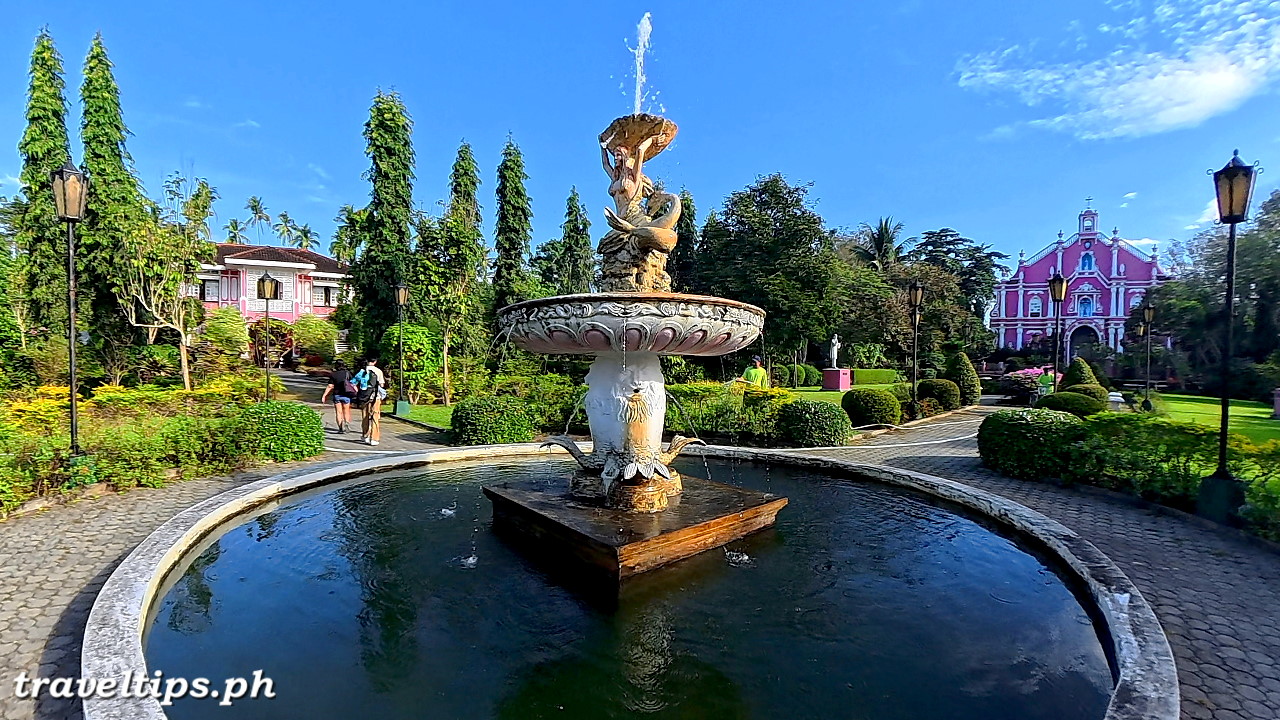
 |
| Casa Consuelo, the courtyard fountain, and the Church Museum. |
Originally a grand ancestral mansion belonging to former proprietors Don Esteban Gomez and Doña Josefa Pamintuan de Gomez from Angeles, Pampanga, the bahay-na-bato Casa, built in the late 19th-century, was saved from deterioration, meticulously dismantled, carefully transported, and gradually rebuilt, piece by piece, on the grounds of the Villa Escudero estate.
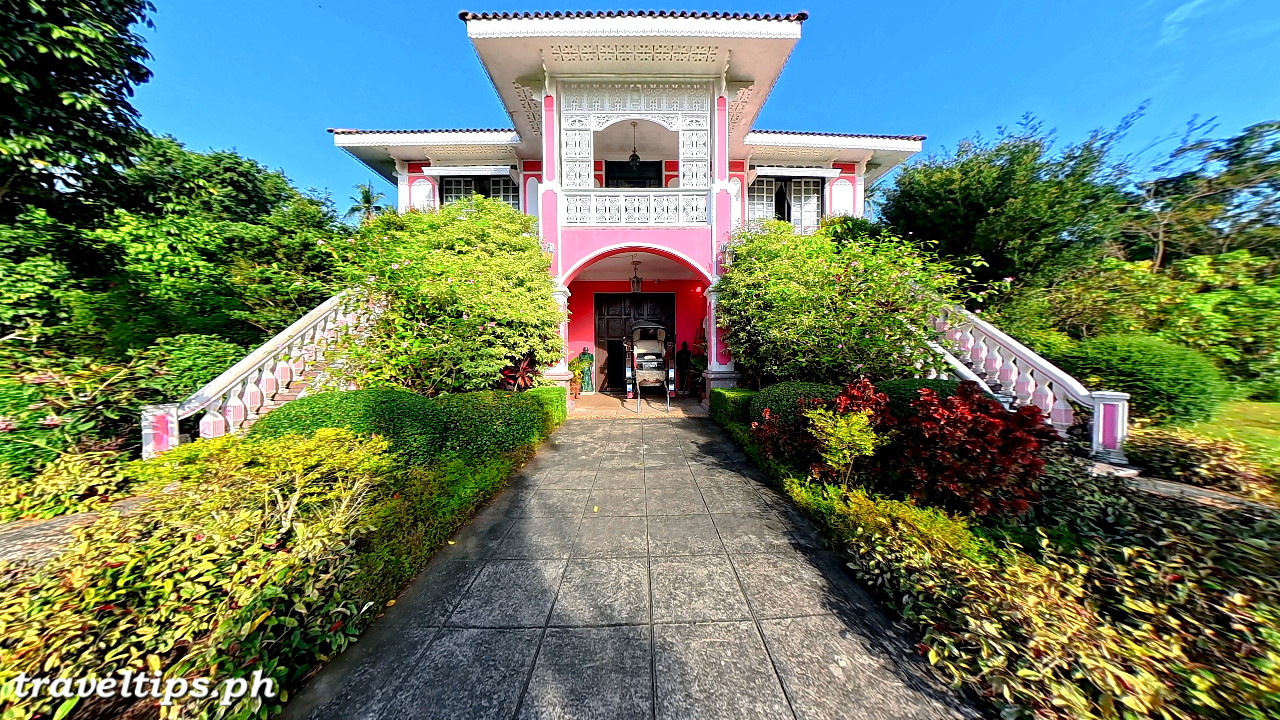
 |
| Casa Consuelo, the original grand mansion of Don Esteban Gomez and Doña Josefa Pamintuan de Gomez. |
One of the highlights of Villa Escudero’s heritage attractions, Casa Consuelo now serves as a museum that offers a rare glimpse into the elite lifestyle of a bygone era, and the beauty of colonial Filipino architecture preserved with meticulous care.
From the moment you step inside, you will undoubtedly be captivated by the expansive hallway, on both sides of which are white bust sculptures mounted on dark wooden pedestals. Framed portraits and plaques adorn its walls, while display cases containing various artifacts and memorabilia line its sides.
 |
| European-inspired interiors, carved valances. Hanging and wall-mounted lamps enhance the charming vintage ambiance. |
Equally eye-catching is the open upper level with a skylight ceiling, that allows natural light to illuminate the interior space.
On the left side of the foyer is a horse-drawn carriage featuring large black wheels and a white cushioned seat. Alongside stands an elaborately designed religious float, embellished with gold and black accents with multiple spherical lamps, and draped with yellow and white fabric. At the top of this float is a statue of the Santo Niño.
 |
| Religious artifacts, rare cultural treasures. |
On the right side of the foyer is the staircase that leads to the upper level. A long wooden bench faces the stairway, and a small decorative table with religious artifacts is positioned against the far wall beneath a window with decorative bars.
 |
| Colonial-era bentwood chair, harlequin Machuca tiles. |
Unlike many heritage homes that rely on replicas, Casa Consuelo showcases an extensive collection of genuine antique furnishings, religious relics, and cultural artifacts—completely devoid of any reproductions or forgeries—establishing it as an exceptional cultural haven within Villa Escudero.
 |
| Beyond the arched doorway, another room reveals portraits, sculptures, and antique furniture, extending the narrative of the past. |
This elegant gallery room highlights Filipino heritage through a refined display of artifacts and decorative pieces. Glass cabinets line the space, showcasing jewelry, fans, tableware, and cultural collectibles, each piece embodying the craftsmanship of that time.
 |
| A round table with a red patterned surface sits prominently in the foreground, adorned with small period tableware that invite closer inspection. |
The polished green flooring contrasts with cream-colored walls, while overhead, recessed lighting, a chandelier, and a ceiling fan combine to create a warm yet stately ambiance.
 |
| Warm lighting enhances the atmosphere, inviting exploration and contemplation. |
Framed photographs and artworks line the walls and the far end of the room, along with display cases offering visitors a curated glimpse into the artistry and traditions of the past.
Across the main room is the small, vintage study or library, suggesting a well-preserved collection of historical or scholarly materials. Along its walls stand tall wooden bookshelves with glass doors filled with numerous books and documents.
The space is furnished with antique pieces, including chairs with red cushions and a round table. Various framed photographs, plaques, and memorabilia adorn the walls, adding to the room’s warm, historical character.
And just before leaving the lower gallery, I wandered around the hallway for the last time to capture what it was like on the other end. On both sides of the hallway are glass display cases containing various artifacts, including miniature dioramas with plants and figures.
Harlequin-patterned tiles salvaged from the Pampanga home adds vibrant geometric accents to the flooring and the base of the staircase that leads to the upper gallery.
The upper gallery focuses more on the elegant interiors of a Spanish colonial–style residence, filled with vintage furnishings and period decor.
Ascending the stairs leads to the main gallery room facing the courtyard, landing on the left wing. A piano and a harp are prominently displayed, alongside a gramophone near the windows—symbols of leisure, refinement, and cultural sophistication in colonial-era Filipino homes.
The main room features ornate ceilings with intricate patterns and chandeliers, polished wooden floors, and large windows draped with lace curtains that let in soft natural light.
Moving on to the middle wing, one will find beautifully carved antique wooden cabinets, framed portraits, mirrors, and decorative lamps embellishing its walls, adding a homely yet refined touch.
At the center, a pair of wooden doors open to reveal a veranda overlooking the courtyard garden.
The veranda features intricate white latticework and decorative ceiling panels, creating a refined and airy atmosphere.
 |
| The striking black-and-white diamond pattern on the floor adds a sense of symmetry and visual harmony. |
Beyond the veranda, beautifully landscaped gardens and trees provide a vivid contrast to the pink and white details of the structure.
 |
| A central paved pathway leads toward a circular fountain, surrounded by manicured lawns, shrubs, and ornamental plants. |
Returning to the main gallery, the right wing gracefully displays additional features of the ancestral residence, including wooden daybeds and intricately woven rattan furniture, complemented by glass-fronted cabinets holding decorative pieces.
Adjacent to the right wing is the dining area, with a long wooden table for ten, draped with a bright yellow tablecloth, and arranged with plates, glasses, and elegant candlesticks.
 |
| High-backed chairs surround it, evoking the grandeur of family gatherings in colonial times. |
Moving on to other parts of the upper gallery, you will be enchanted by the thoughtfully arranged layout of the hallway, featuring ornate wrought-iron railings, decorative wall panels, and a spacious skylight that bathes the corridor in natural light.
 |
| Framed portraits and paintings line the hallway walls, while the checkered tile flooring emphasize the house’s historical elegance. |
Across the dining area is the ancestral bedroom, carefully preserved to showcase colonial-era domestic life. A large four-poster bed with elaborate wooden carvings and a delicate lace canopy dominates the room.
Surrounding the bed are antique wooden pieces—a carved wardrobe, a dresser with mirror, a chest at the foot of the bed, and a small side table with a lamp.
Next to the bedroom lies the charming heritage kitchen or pantry. At its heart stands a brick stove with firewood neatly tucked underneath, topped by clay pots that speak of traditional cooking methods.
 |
| Sunlight filters softly through capiz shell windows, casting a warm glow across the red-tiled floor. |
Hanging utensils line the wall, while a sturdy round wooden table with chairs sets the room as a communal space. To the left is a wooden cabinet displaying ceramic and metal kitchenware, adding to the sense of a cherished history.
 |
| Overhead, glass-shaded lamps illuminate the space, blending practicality with old-world elegance. |
At the far end of the hall can be found the heritage washroom, which recreates the intimate routines of Filipino domestic life from centuries past.
Wooden washstands topped with metal basins line the room, paired with a framed mirror that reflects the craftsmanship of the time. A chair with a built-in chamber pot sits nearby, a reminder of practical ingenuity prior to the advent of modern plumbing.
 |
| Ceramic and metal basins are arranged on tables and stands, complemented by a large clay water jar in the foreground. |
Likewise, before leaving the upper gallery, I wandered around the hallway for the last time to capture what it was like on the other end.
Casa Consuelo is an integral part of Villa Escudero’s cultural immersion experience, making it an ideal destination for heritage travelers, architecture enthusiasts, and anyone fascinated by Philippine colonial history.