|
Thursday November 20, 2025
The Quezon Heritage House is a historic house museum that serves as a living time capsule offering insight into the family and personal life of the first president of the Philippine Commonwealth, Manuel L. Quezon.
The house is a reconstructed version of the former president’s family residence at 45 Gilmore Street in New Manila, Quezon City.
Relocated within the Quezon Memorial Circle, the house stood witness to the challenging times faced by the ailing President and the family’s resilience after his passing.
The Quezon Heritage House is open to the public for free, from Tuesday to Sunday, 9:00am to 4:00pm.
A tour guide is mandatory, and comes with the visit at no added cost. Visitors are not allowed to wander around the heritage house on their own. In hindsight, having someone narrate the history behind the exhibits proved to be quite educational.
Also be aware that only taking photos is permitted. Capturing video footage is prohibited.
Because of the house’s traditional bahay na bato architectural layout, the tour actually starts on the second floor and moves downward. During my visit, the guided tour generally adhered to this sequence:
Visitors ascend the exterior grand staircase to begin their tour directly to the upper level. A wide, covered driveway overhang (porte-cochère) extends out from the side of the house, underneath of which is the visitor’s registration / reception area.
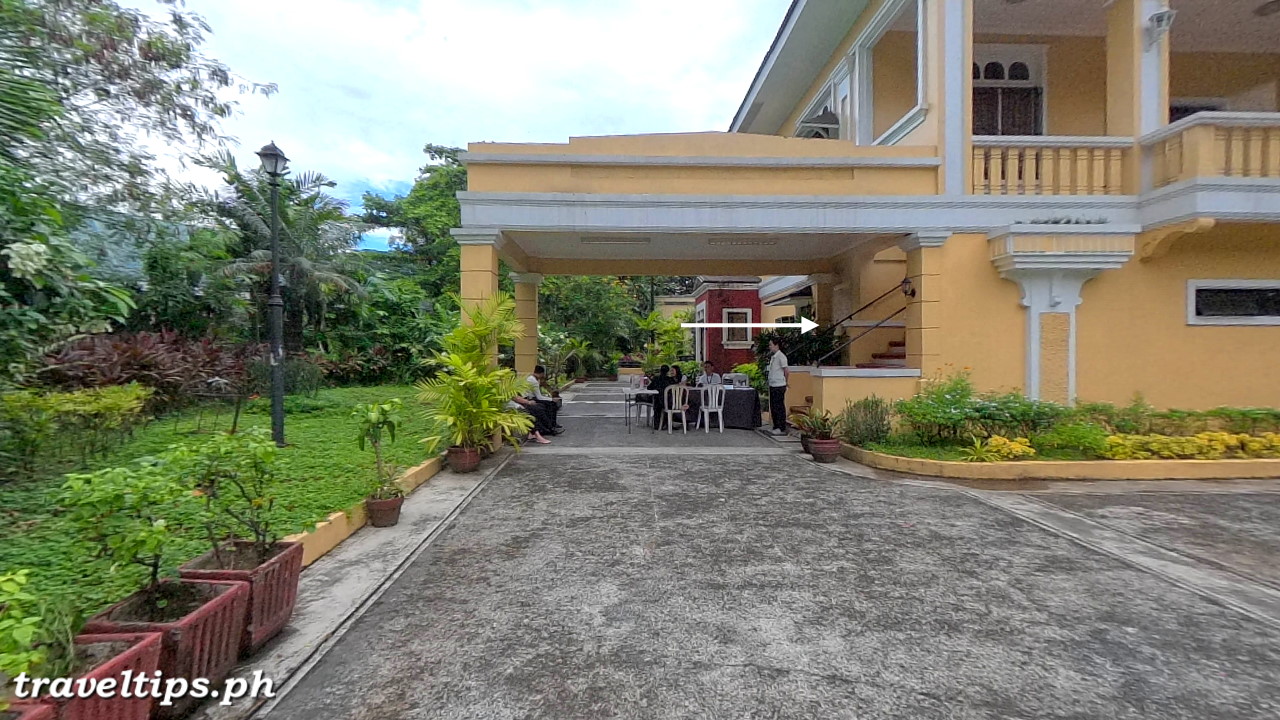 |
| The white arrow drawn on the image points toward the staircase area where visitors transition. |
At the top, guests are greeted by the elegant Machuca tiled floor of the veranda, which leads to the main entrance doors elegantly bordered by white concrete molding. Visitors enter through this pair of dark-stained wood-paneled doors adorned with a classic metallic doorknob.
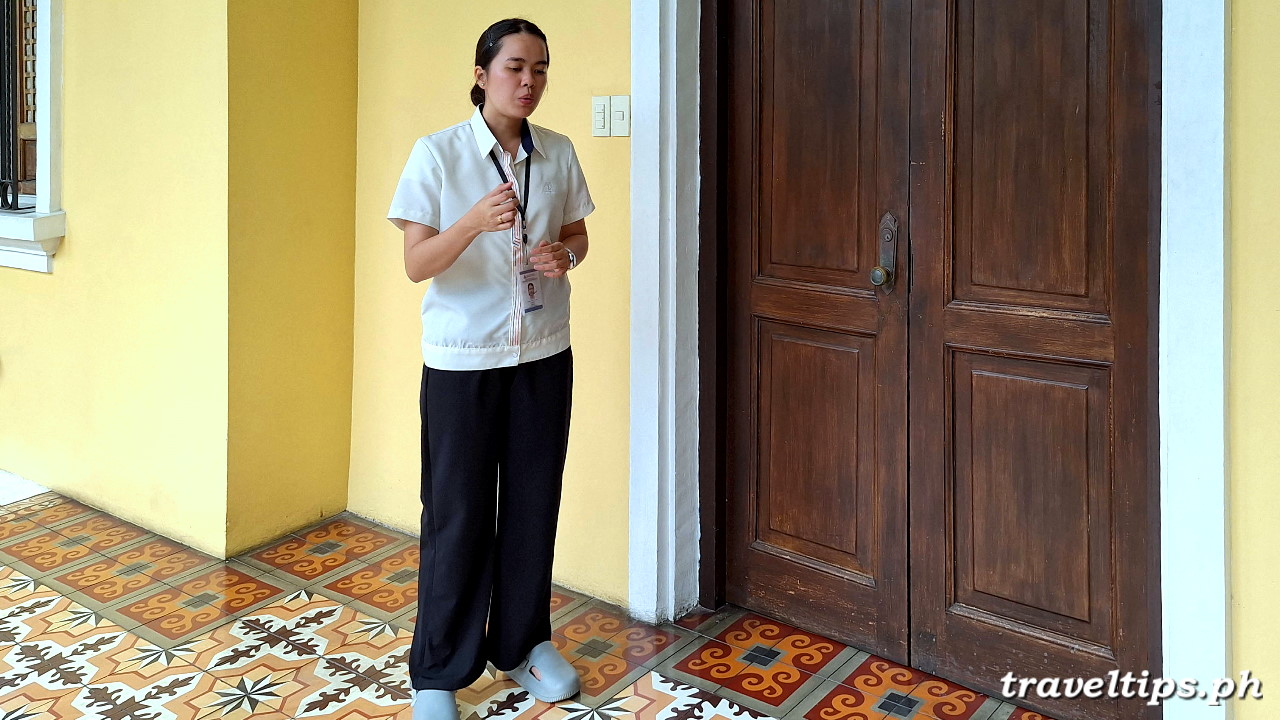 |
| My female guide is captured here giving an introductory briefing before we entered the house. |
The tour then leads to the main living area, or sala mayor, which serves as the grand reception area of the home. It is a beautifully preserved space that reflects the family’s personal life and social interactions during the Commonwealth era.
The sala mayor highlights original 1920s furnishings and historical mementos from the Commonwealth period. This vintage Ambassador sala set, made of high-quality native narra, reflects the affluent lifestyle during the period.
Within the main living room are informational panels that detail the history and construction of the heritage house itself.
The tour then proceeds to Doña Aurora’s bedroom, located conveniently to the left of the sala mayor.
Doña Aurora’s bedroom stands as a beautiful testament to her elegance, her deep faith, and her resilience as the country’s first Commonwealth-era First Lady.
Because tuberculosis was highly contagious and incurable at the time, President Quezon and Doña Aurora actually slept in separate bedrooms, connected only by a shared bathroom.
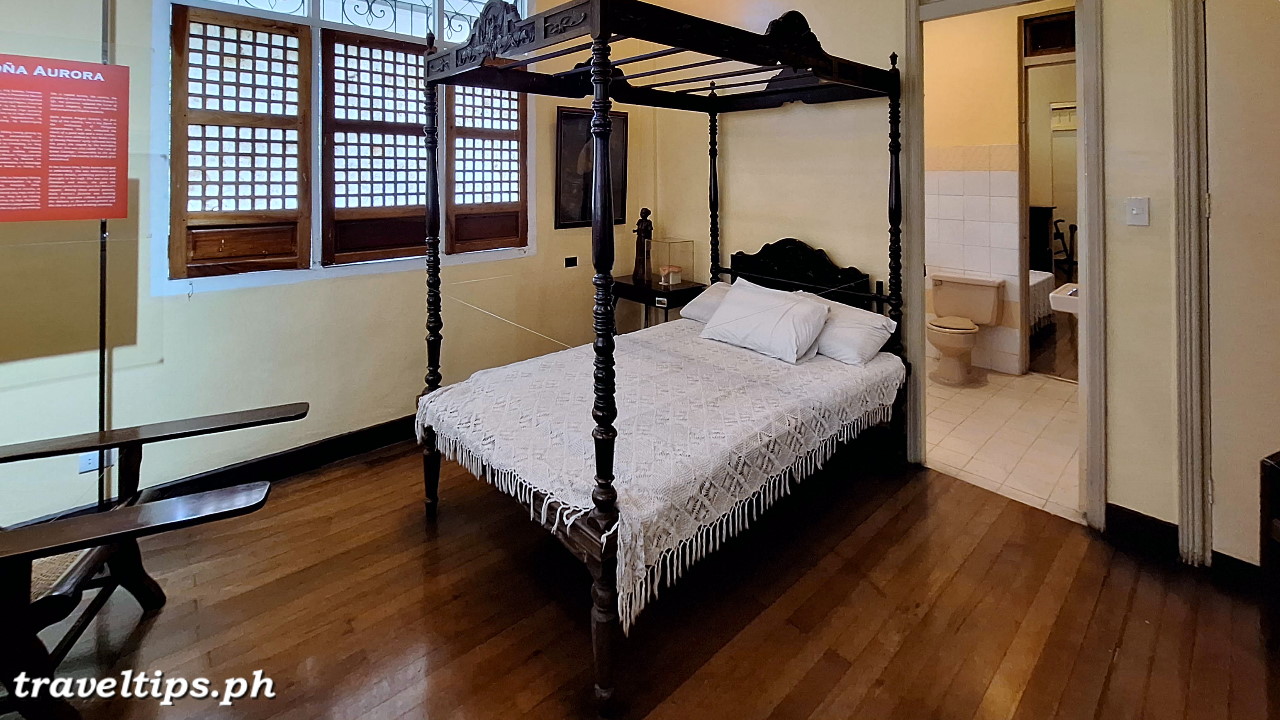 |
| An open doorway reveals the adjoining comfort room, while a second doorway leads into President Quezon’s room. |
This specific architectural layout allowed the couple to maintain close companionship, communication, and emotional support while strictly respecting the medical isolation required for his health.
The centerpiece of Doña Aurora’s bedroom is an authentic, beautifully preserved four-poster bed carved from premium native narra wood, neatly dressed with white pillows and a patterned, white woven bedspread featuring a fringed trim hanging down the sides.
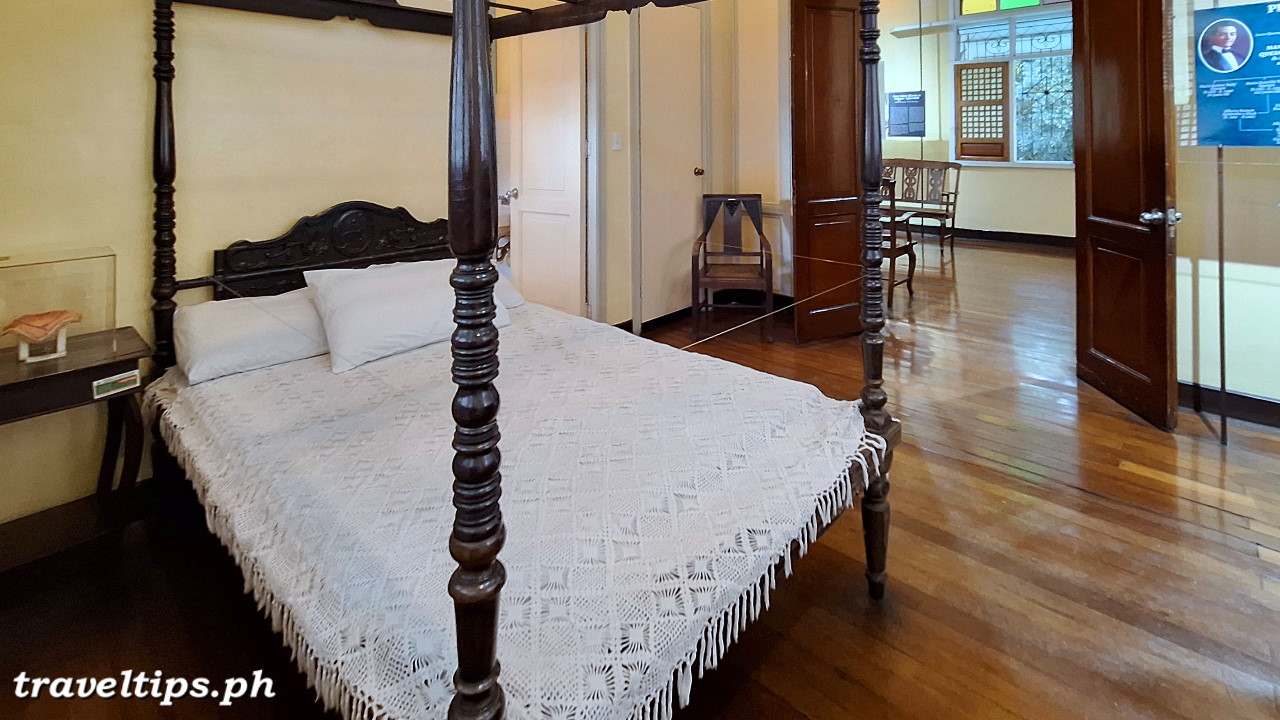 |
| A thin white security line is strung across the posts to prevent visitors from getting too close. |
Within the room stands an informational display depicting the Quezon family tree, featuring oval portraits of President Manuel Luis Quezon y Molina on the left and Doña Aurora Antonia Aragon y Molina on the right. A genealogical chart maps out their children and further descendants.
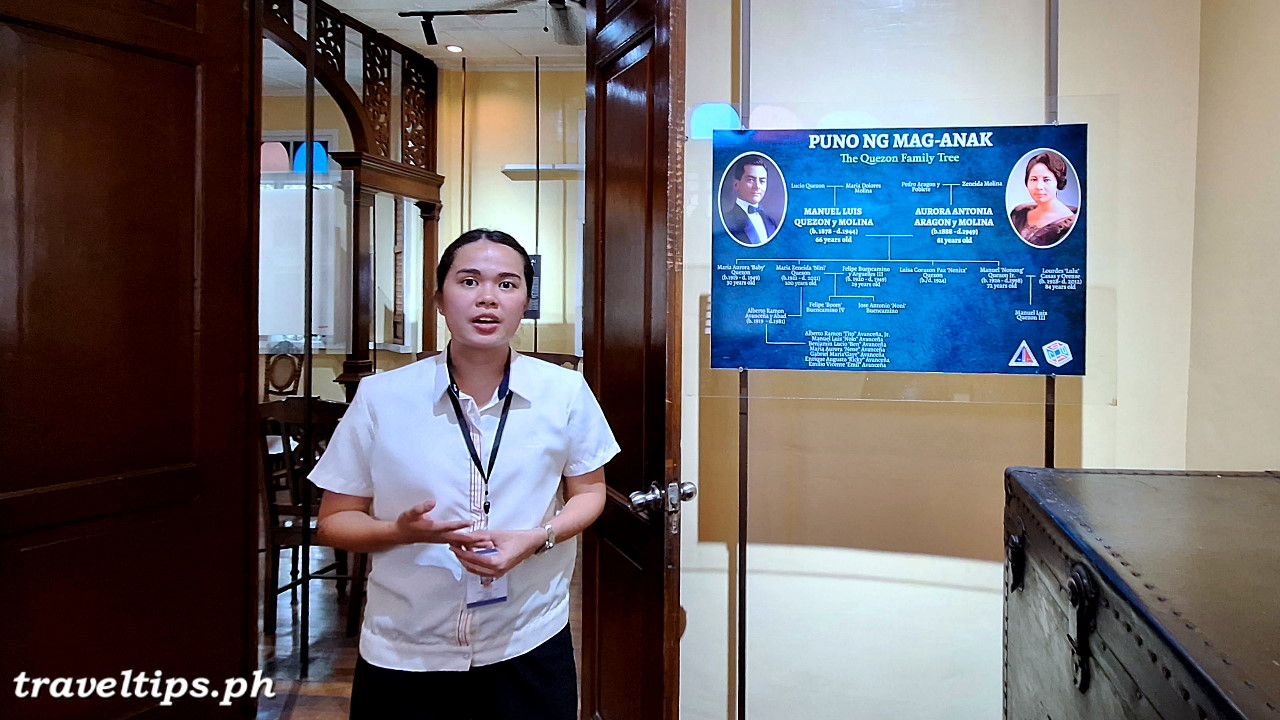 |
| My female guide is captured here briefing me about the family tree. |
The room also features a collection of historic artifacts and personal belongings, including two large antique travel trunks, an elegant, dark-stained wooden dressing table with a light-colored marble top, and a reclining woven armchair.
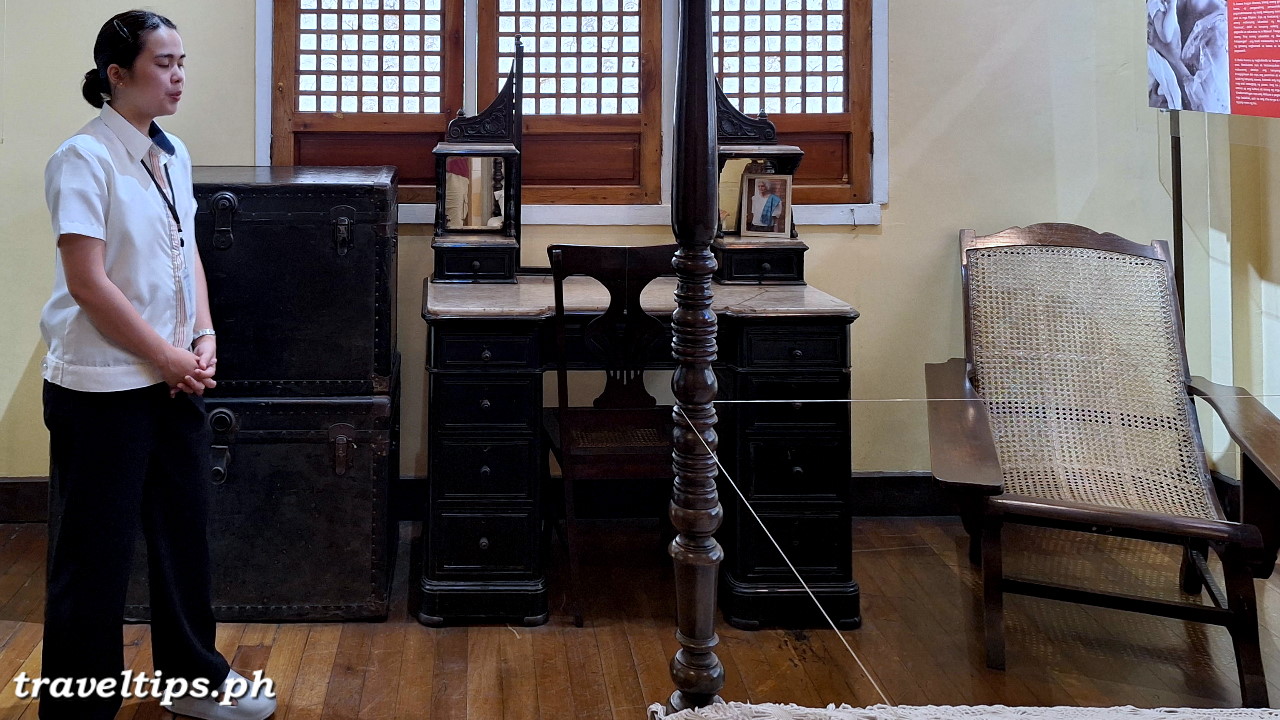 |
| Two small matching wooden mirror structures sits on top of the vintage vanity. |
An informative display panel details her legacy, her elegance, her role as the country’s first Commonwealth First Lady, and her personal interests (such as embroidery, literature, and music).
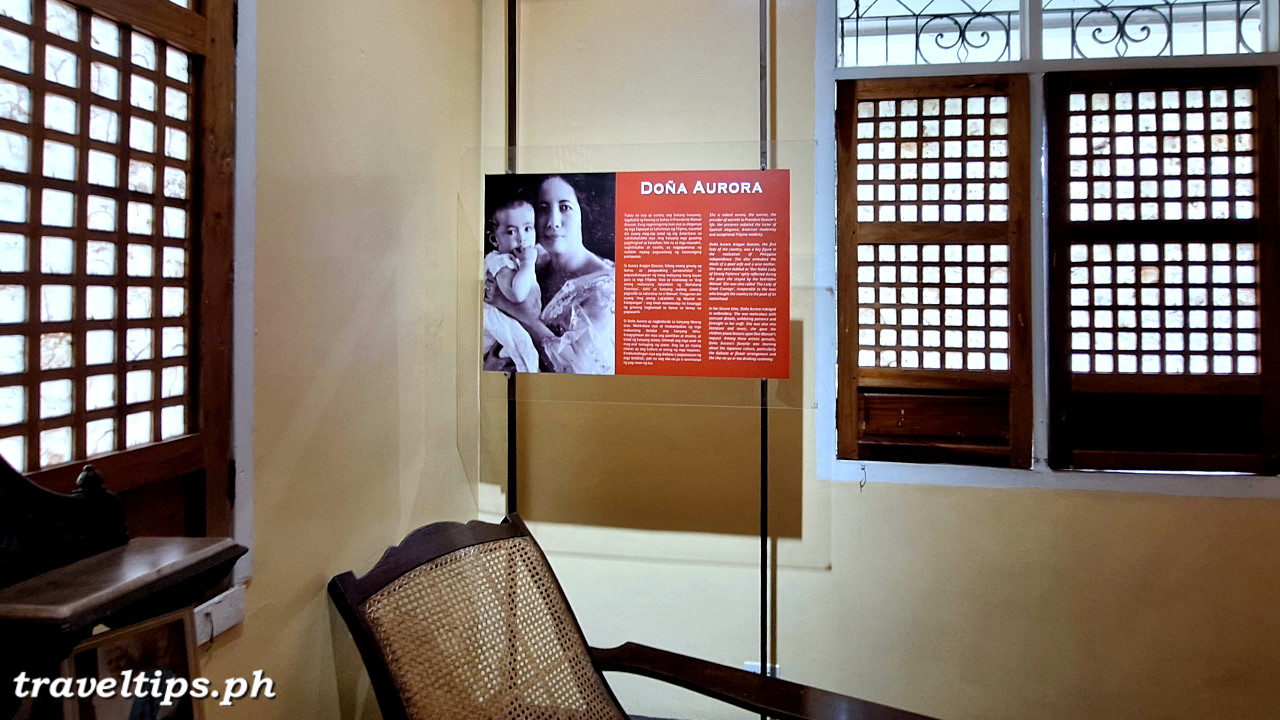 |
| The left side of the panel features a portrait of Doña Aurora gracefully cradling a young baby in her arms. |
The tour then proceeds to the president’s bedroom, located across the connecting comfort room.
President Manuel L. Quezon’s bedroom is one of the most historically significant rooms in the heritage house, offering a poignant, intimate glimpse into his private life, his high-fashion tastes, and his difficult battle with illness.
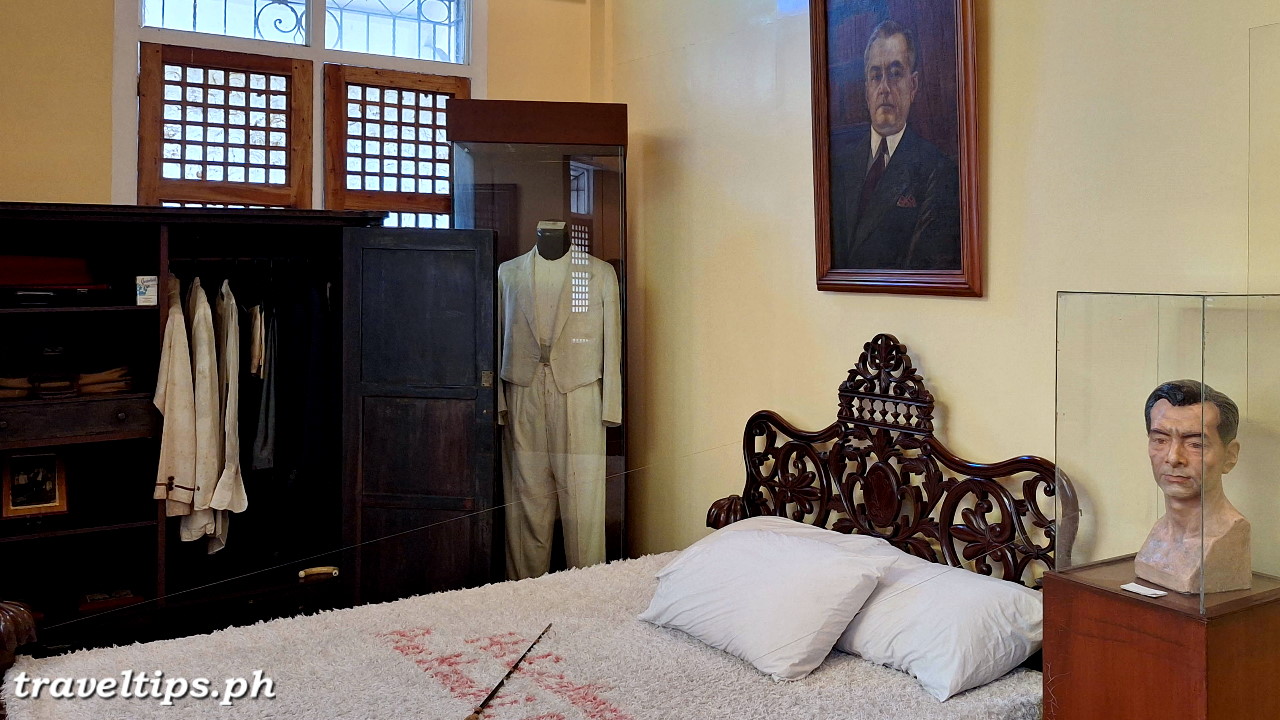 |
| The room features his original wardrobe and the Ah Tay bed where he rested during his battle with tuberculosis. |
A vintage wooden wardrobe showcases the President’s legendary dapper fashion sense. On display are his authentic 1920s and 30s clothing accessories, including high-end classy suits, bow ties, Stetson hats, and his collection of stylish walking sticks.
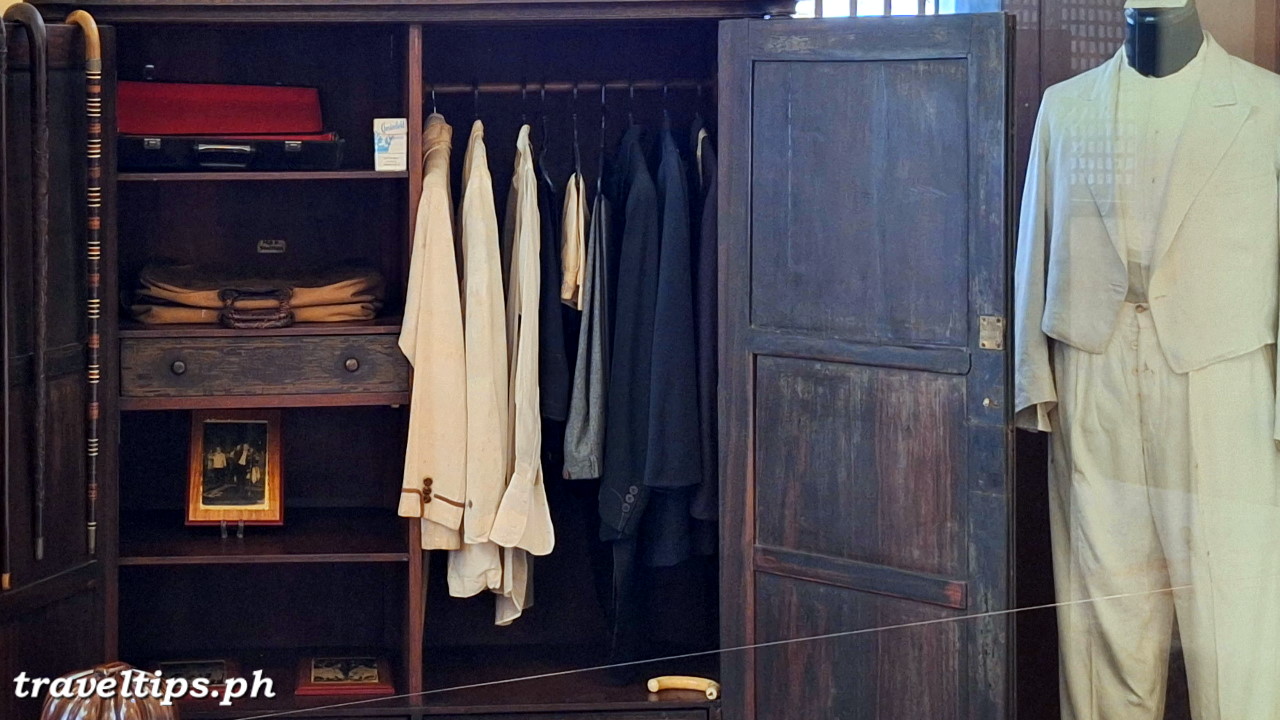 |
| A glass cabinet stands nearby, housing a full-sized mannequin in a white suit. |
The room also features a collection of historic artifacts and personal belongings, including vintage luggage, display cases, and an ornate, dark wooden rocking chair, solihiya style.
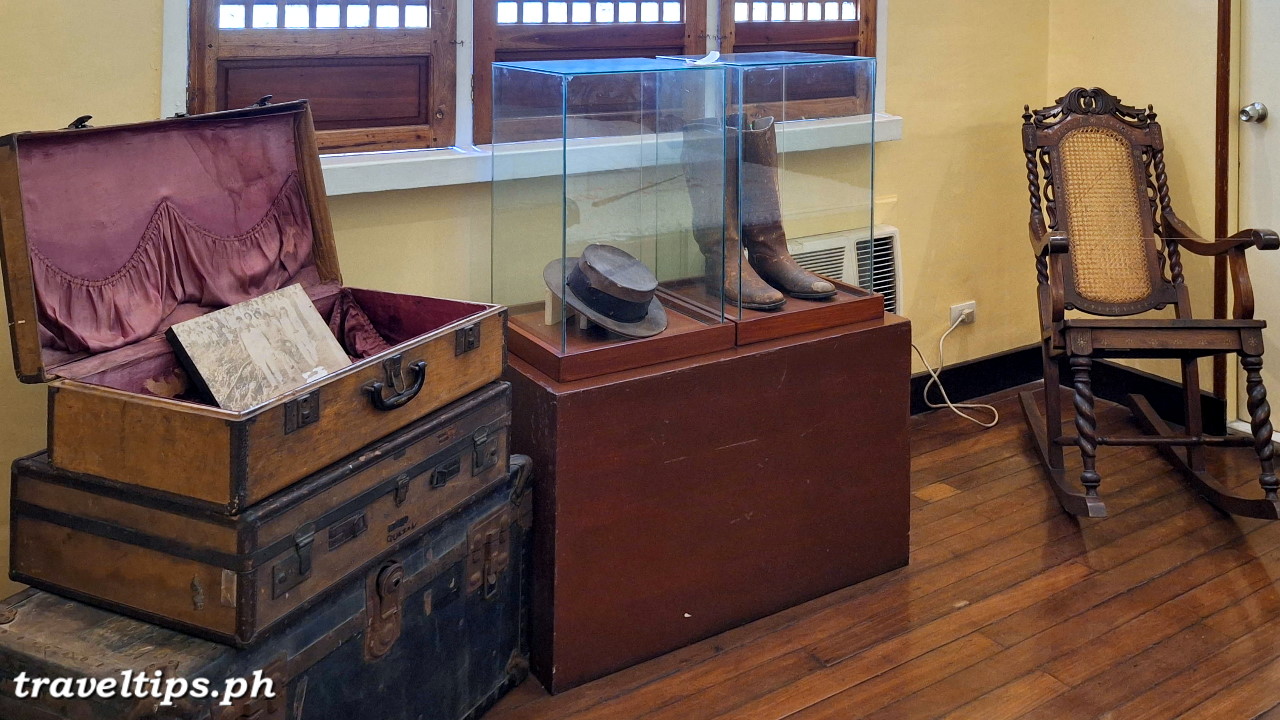 |
| Three antique travel trunks, a fedora hat, leather riding boots, and an intricately carved rocking chair. |
An informative display panel details his intense work ethic, his heavy smoking habit, his eventual tuberculosis diagnosis, and how the ordeal led him back to his Catholic faith.
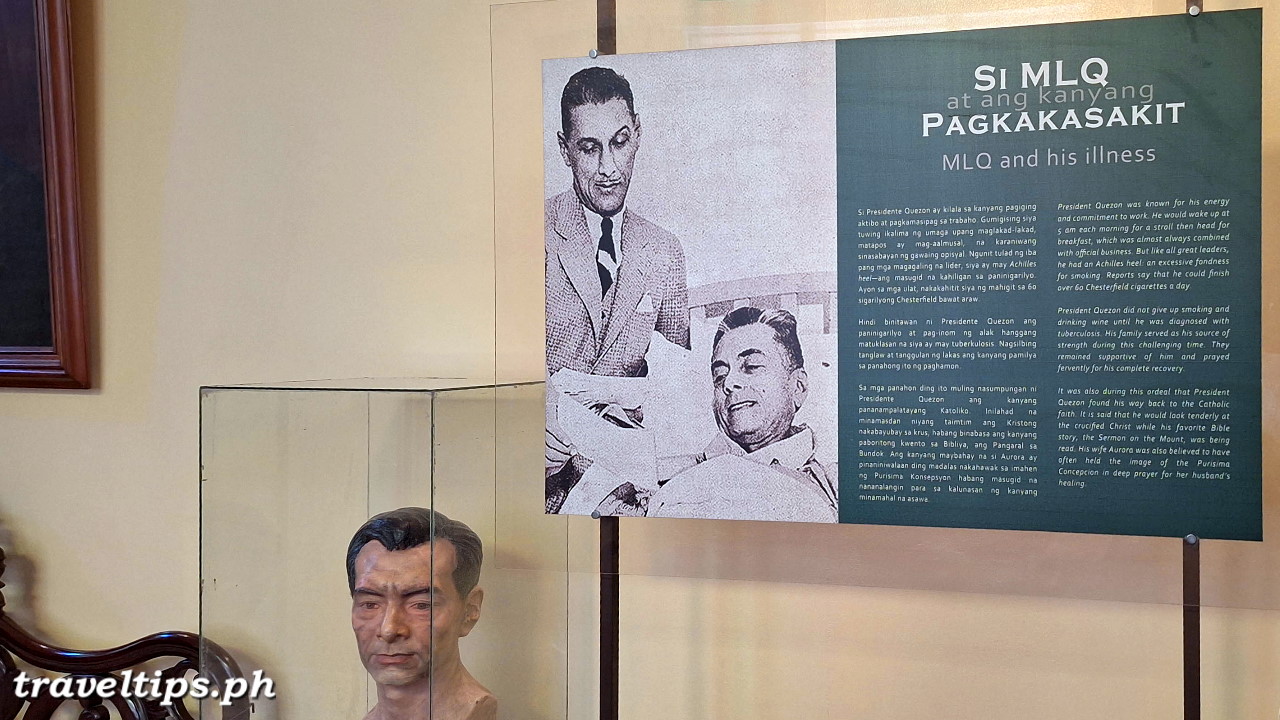 |
| On the lower left is a realistic bust sculpture of the president, enclosed inside a glass display case. |
Right next to his bedroom is an adjoining smaller anteroom that served as the quarters for his personal nurse, who stayed there 24/7 to monitor his failing health and provide immediate medical assistance when his coughing fits worsened.
Next on the tour was the dining area, just a step outside the nurse’s room.
The upper dining room sits adjacent to the sala mayor. Instead of a solid wall, a delicate, intricately carved wooden divider (callado) separates the open-plan layout of the main living room from the dining area, allowing for natural air circulation and light.
A classic round wooden dining table serves as the centerpiece. Museum guides often share a lively historical anecdote about this table: it was occasionally pushed aside to clear the floor whenever President Manuel L. Quezon—who was known to be quite fond of social gatherings—wanted to dance the tango.
The room is dressed with authentic vintage furniture, including a prominent platera (glass-front cabinet) used to showcase the family’s crystal plates and formal dinnerware.
Within the dining area are informational panels showcasing the personal and family life of the Quezons.
The left panel highlights Manuel L. Quezon’s role as a father, noting his affectionate but sometimes strict parenting, his love for dancing (specifically the rumba), and how his concept of “home” became grounded after marrying Doña Aurora.
The right panel describes a simple, playful game called “Ilong, Ilong, Ilong”, where players must touch their noses or other parts of the face as dictated by a leader, that the family frequently played together to pass the time during long road trips on dusty roads.
A historical display panel outlines the establishment of the Philippine Commonwealth on November 15, 1935, highlighting it as a transitional administration meant to prepare the country for full independence.
Directly beyond the dining area lies the upper kitchen. This space highlights the family’s culinary traditions and displays historical food items, including the family’s recipe for Cocido Español.
The room houses a prized, bone-inlaid antique Baliuag chest topped with a portrait of President Quezon dressed as a farmer, symbolizing his aspirations for national agrarian reform.
Interestingly, this kitchen contains no stove because, during that era, all heavy meals were cooked in the outdoor back area or downstairs to keep smoke out of the main house.
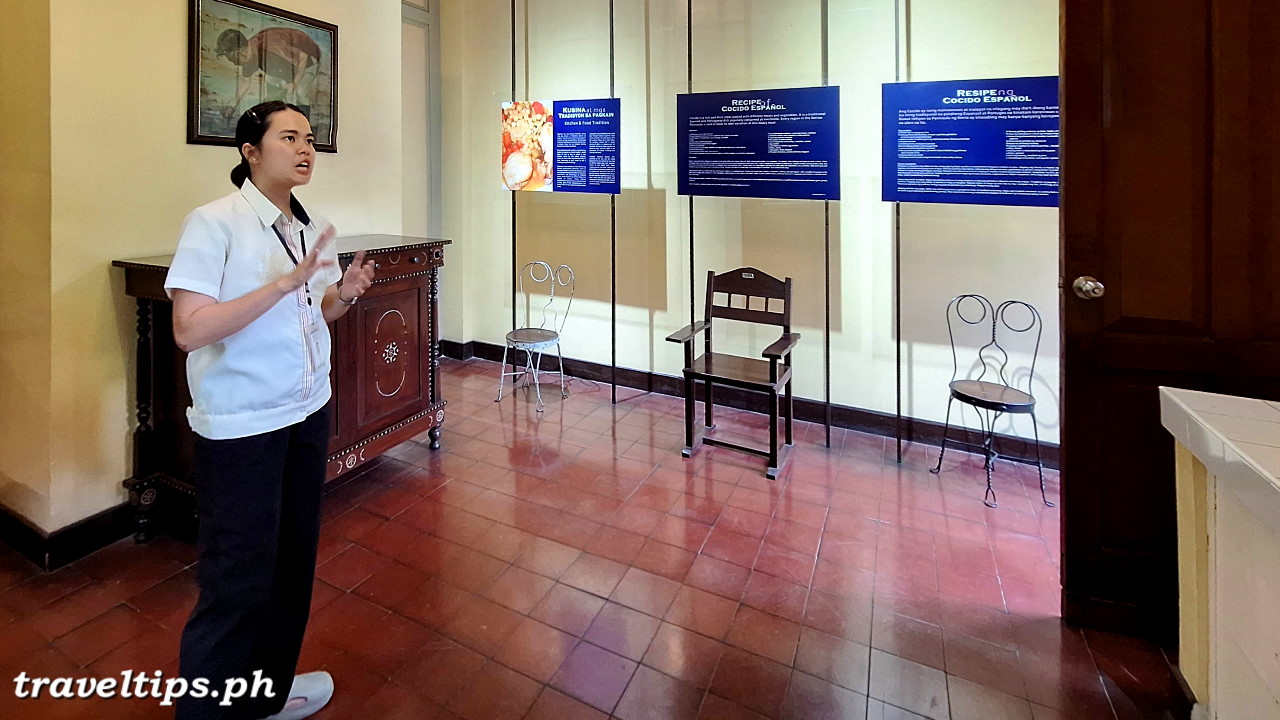 |
| Within this section are informational panels that showcase the family’s culinary history |
The center panel features a display of President Quezon’s favorite recipe, Cocido Español (Spanish stew).
Looking out from the adjoining veranda of the kitchen, one can see the recreated grounds at the back of the house.
The surrounding exterior features a recreation of the family’s old social hall and a swimming pool that has been repurposed into a garden fountain.
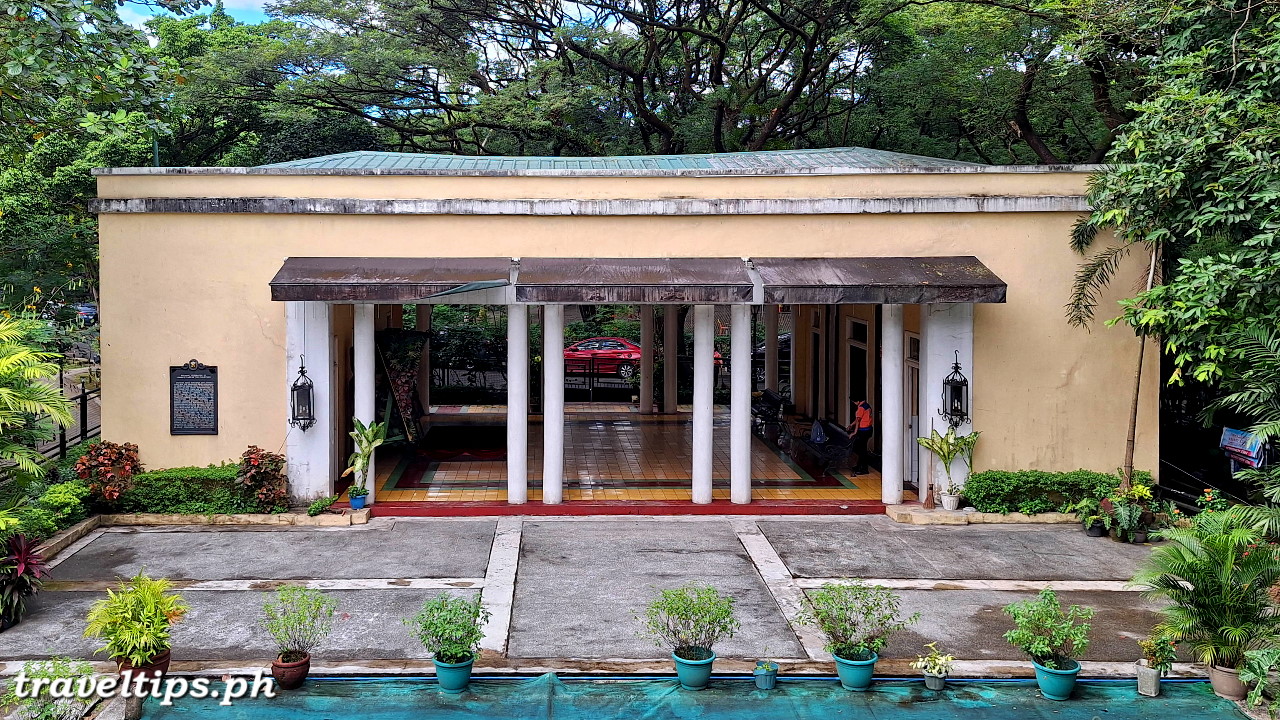 |
| The old social hall was under renovation at the time of my visit. |
My guide then led me back to the sala mayor, where the tour transitions downstairs via the iconic 19-step wrought-iron spiral staircase.
The exhibits at the ground level focus mainly on the personal and family life of the Quezons, with particular emphasis on the former First Lady. The ground floor served mainly as Doña Aurora’s office, the children’s rooms, and the sentimental artifact displays.
Once downstairs, guests are greeted by a family sitting area that also served as Doña Aurora’s office reception space.
The space is furnished with several vintage-style wooden and wicker pieces arranged to form distinct seating sections.
In the background hangs a framed informational plaque featuring a portrait of Quezon. Additionally, a glass display case houses a life-sized wax statue of the president. To the right stands a sculptural bust of Quezon, elegantly positioned on a tall, dark wooden pedestal.
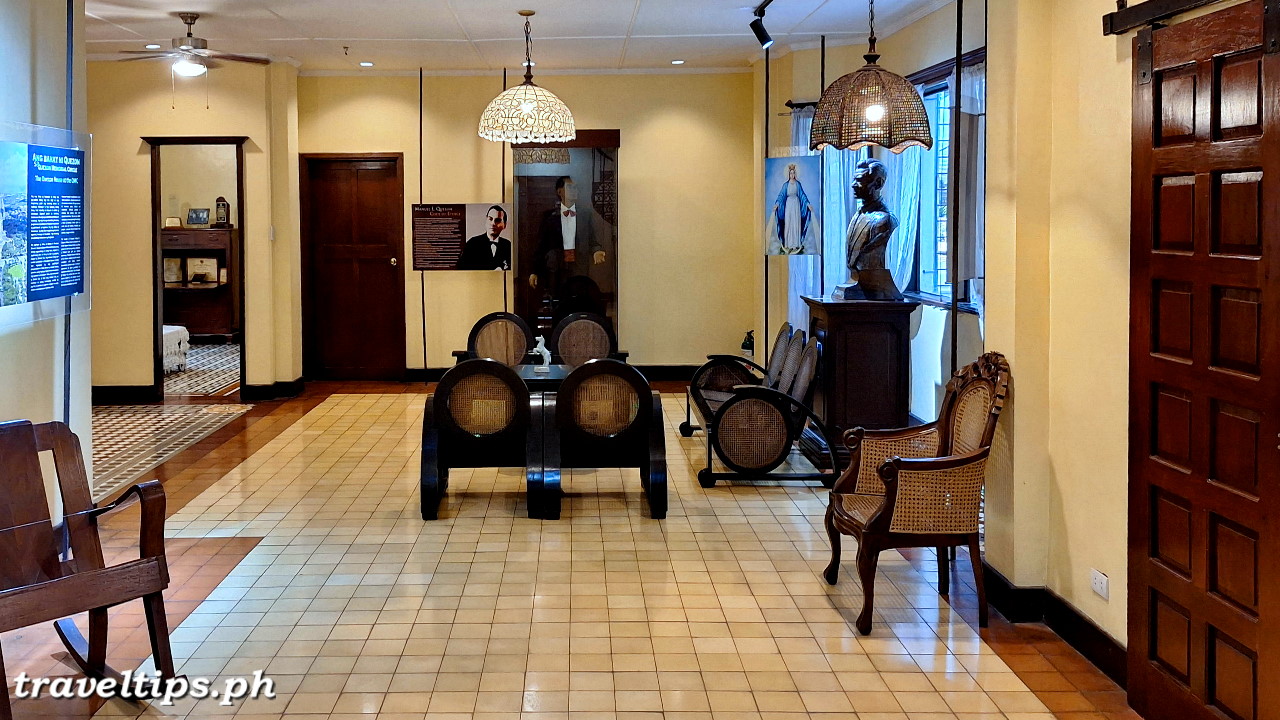 |
| Private reception area, with several historical displays and artifacts placed around the room. |
A wider, alternative angle of the sitting area, showing the spiral staircase prominently. The lighting is warm, combining natural light from a window with artificial light from overhead fixtures, including decorative hanging lamps.
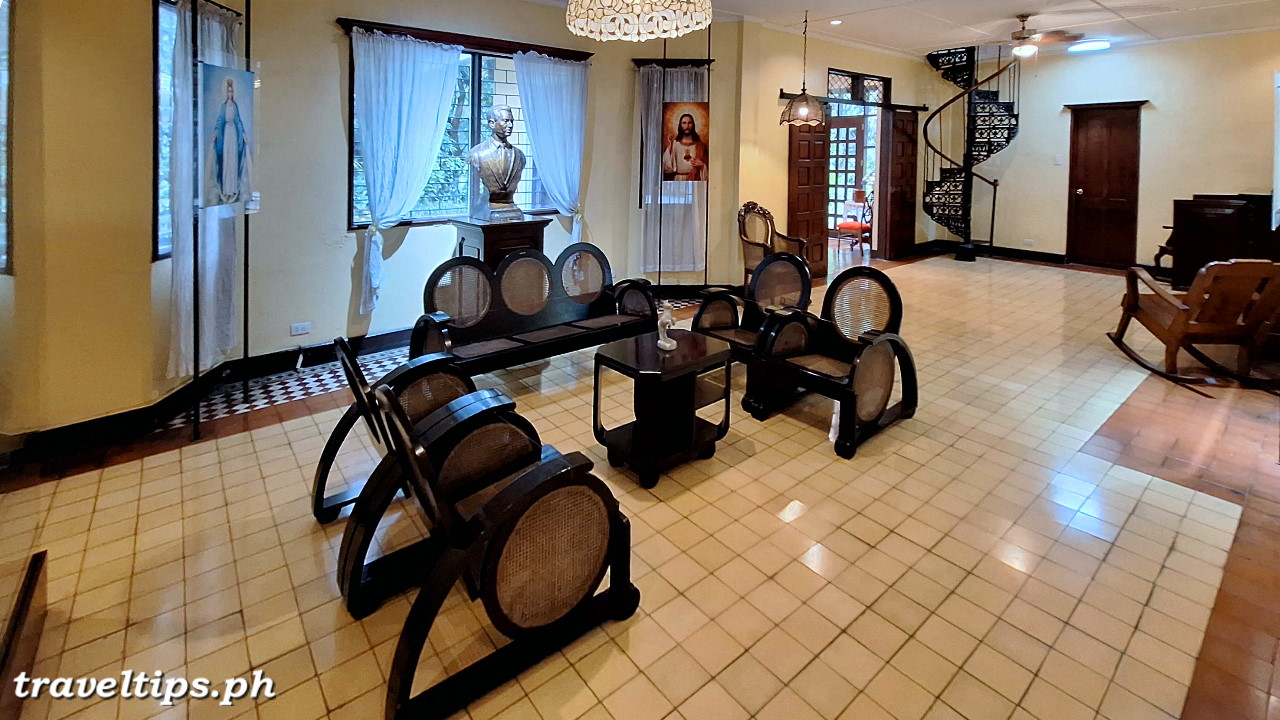 |
| The space is designed to replicate a mid-20th-century Filipino living room or receiving area (sala). |
The Art Deco-style living room suite is prominently displayed in the center, which includes a sofa bench and four matching armchairs.
Two translucent fabric banners featuring religious portraits flank the background. The left panel depicts the Virgin Mary, while the right one features the Sacred Heart of Jesus.
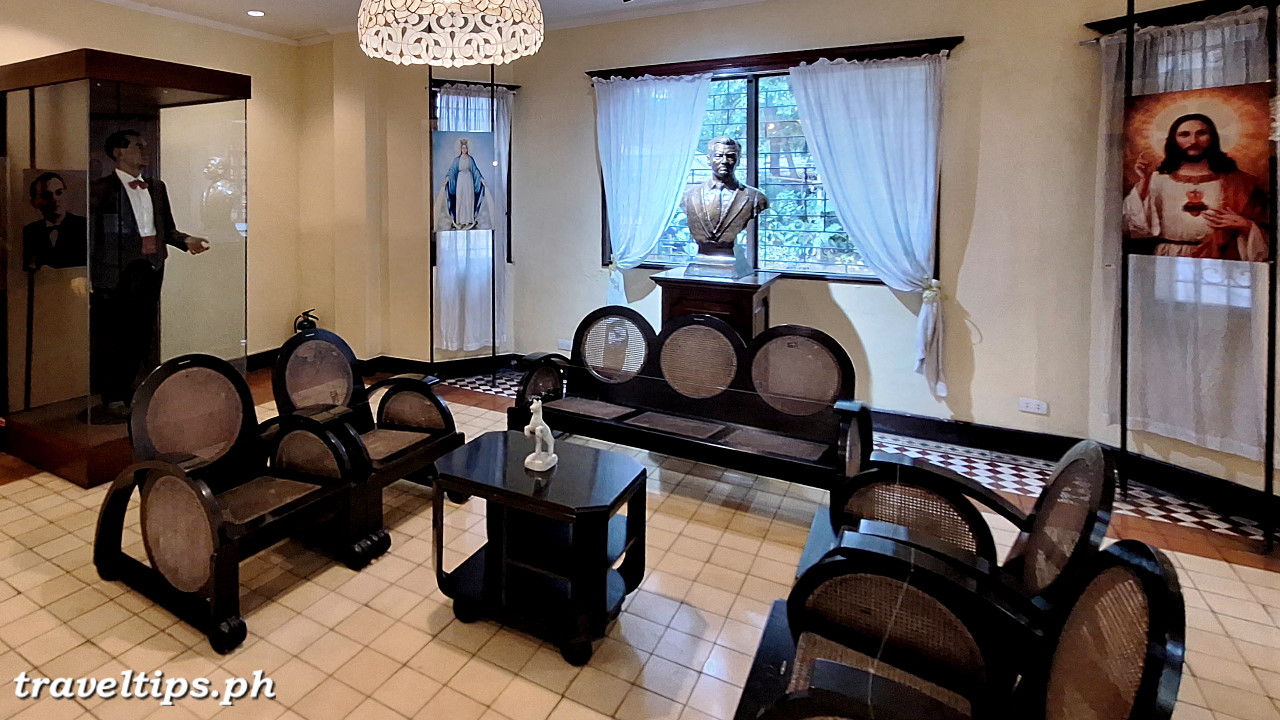 |
| A polished wooden coffee table sits in the middle, topped with a small ceramic figurine of a horse. |
The informational sign features a formal portrait of Quezon dressed in a black suit and bow tie, alongside a numbered list outlining the civic principles that the president upheld.
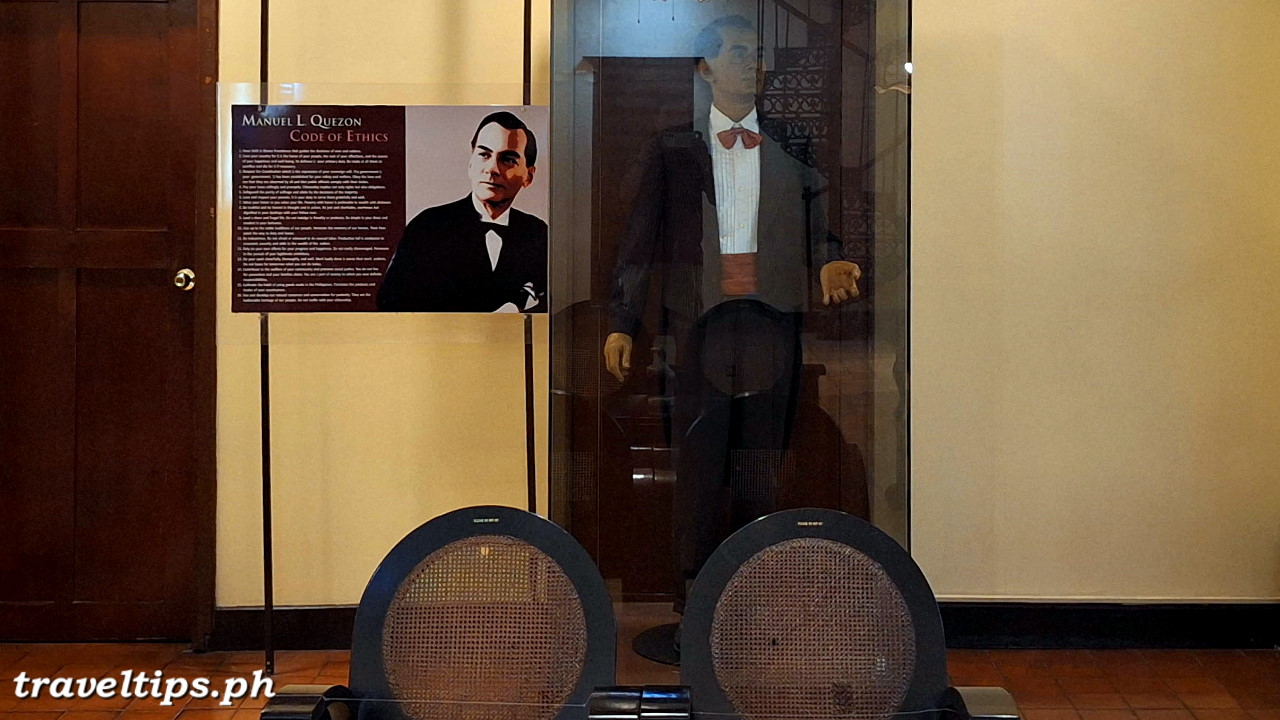 |
| In the center stands a glass display case housing a life-sized wax statue of Quezon, wearing a formal tuxedo. |
The tour then leads to Doña Aurora’s office, just beside the spiral staircase.
The main highlight of the ground floor is undoubtedly this room, which served as the official workspace for the First Lady. The space was designed to resemble the original office setting, including the carefully preserved period furniture.
Doña Aurora’s office served as the exact historical site where the Philippine National Red Cross was officially established. The room is elegantly decorated with bespoke office furniture that perfectly embodies the period’s style.
At the rear of this exhibition space is a section dedicated to the historical significance of the Philippine Red Cross, highlighting the crucial role this room played in its development.
In 1934, President Manuel L. Quezon took the initiative to establish an independent Philippine Red Cross, but it was not until the Philippines became independent did this materialize because the Commonwealth cannot sign the Geneva Conventions.
In 1942, a Japanese-controlled Philippine Red Cross was created to take care of internment camps located in the country. Upon the liberation of Manila in 1945, local Red Cross officials and the American National Red Cross undertook to reconstitute the organization.
Finally, on March 22, 1947, President Roxas signed Republic Act 95, or the Philippine Red Cross (PRC) Charter. Shortly after, on March 29, Mrs. Aurora Aragon Quezon was appointed the first PRC Chairman.
The tour then proceeds just across the office, which showcases a small collection of family memorabilia and bookcases.
This section features displays housing sentimental family heirlooms, public life mementos, personal books, and historic documents.
On one side hangs a sign describing how the house was meticulously transferred from its original location on Gilmore Street in New Manila to its current site inside the Quezon Memorial Circle, to serve as a museum and monument to the late President’s legacy.
The tour then proceeds to the ground floor bedrooms.
There are two bedrooms on this level, originally used by the Quezon children—María Aurora and María Zenaida sharing one room, and Manuel Jr. on the other.
Inside this room are two separate single beds made of dark wood, each covered with matching white, intricately patterned crocheted bedspreads.
A closer, alternative angle of the same bedroom shows other details of the beds. The bed on the left has a headboard with a decorative dark wood carving inset, while the bed on the right features a simpler, vertically grooved headboard design.
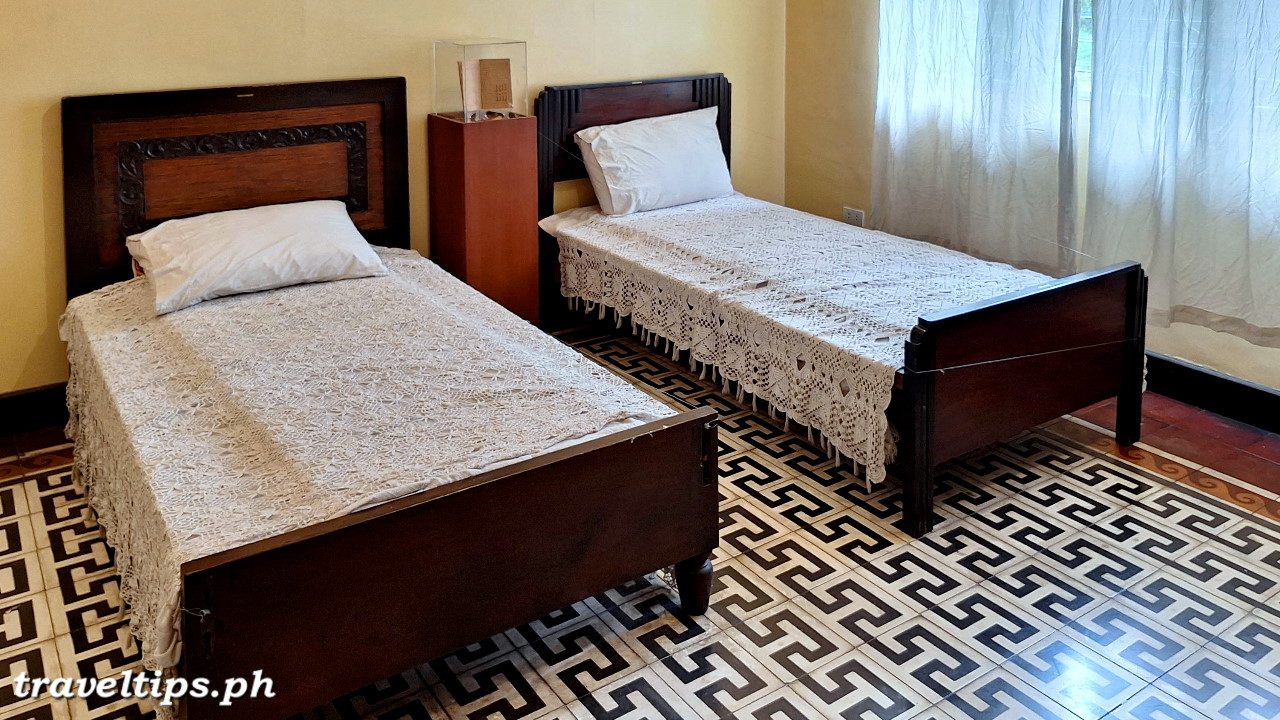 |
| A wooden pedestal displays a vintage, bound booklet, part of the historical memorabilia preserved in the children’s room. |
In one corner stands a small round wooden table with a vintage typewriter on top, paired with a single wooden chair. Along the back wall sits a dark wooden secretary desk displaying framed certificates, photos, and plaques.
Three small, framed vintage photographs show early 20th-century family memories of the Quezon children and their parents, President Manuel L. Quezon and First Lady Aurora Aragon Quezon.
One of the prominent historic portraits displayed in this bedroom depicts their first grandchild, Ambo.
He was a notable survivor of the tragic 1949 Hukbalahap ambush that claimed the lives of Doña Aurora and María Aurora, having been spared because his pregnant mother, Zenaida, had stayed behind.
The tour then leads to the bedroom of Manuel Jr., which later became Doña Aurora’s later-life bedroom.
This room, historically designated as the boy’s bedroom belonging to Manuel Nonong Quezon Jr., underwent a practical transformation in the family’s later years.
As Doña Aurora advanced in age, navigating the house’s original spiral staircase became increasingly difficult. Consequently, the former boy’s bedroom was repurposed to serve as her bedroom, allowing her to stay comfortably on the lower level.
Hanging directly above the headboard is a large, framed painting depicting a composite historical scene: a large profile portrait of President Manuel L. Quezon on the left, looking toward a group of children and figures rendered in softer tones on the right.
Flanking both sides of the headboard are two matching wooden nightstands, with black-framed portraits of the Quezon daughters sitting on top of each nightstand.
On one side of the room stands the aparador (wardrobe showcase) featuring authentic garments, including some of the formal ternos (traditional dresses) worn by Doña Aurora and her daughters.
Doña Aurora’s later-life bedroom contains an arrangement of historical furniture, storage units and artworks, which include the vintage office safe, a wooden armoire/cabinet, the side credenza and memorabilia.
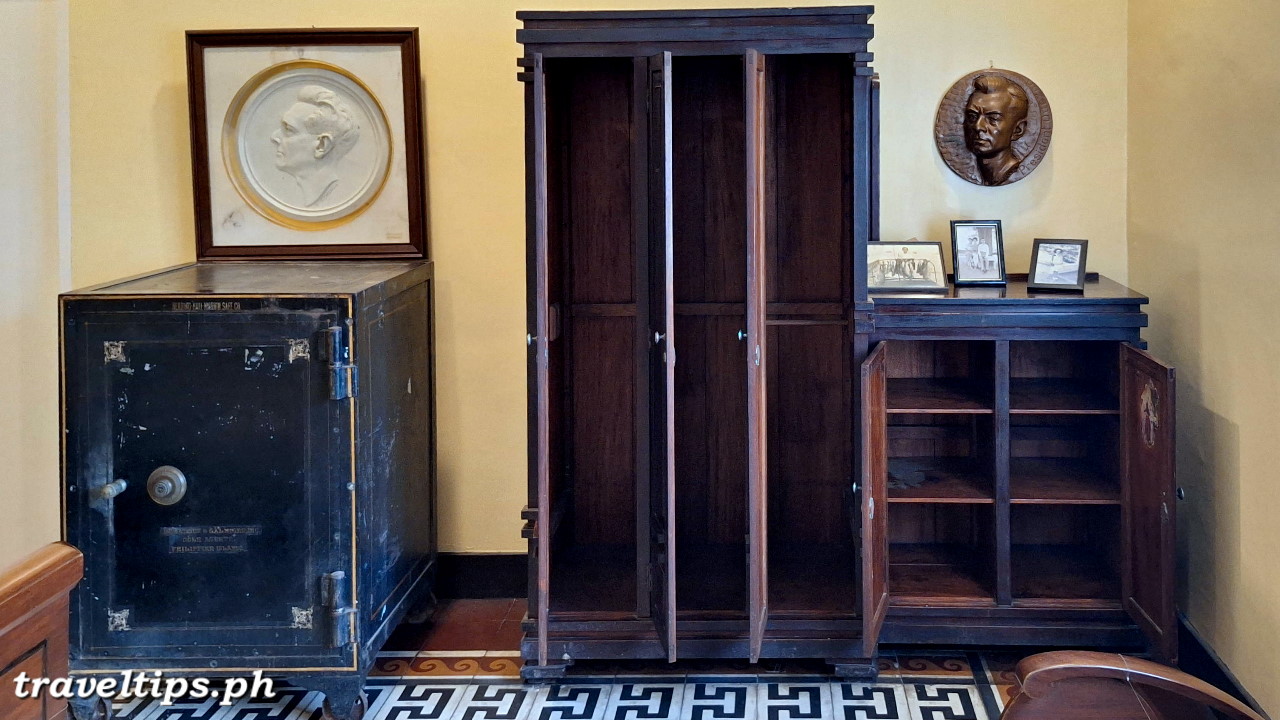 |
| On the wall are two sculpted reliefs of President Quezon’s head, made by artist Graciano Nepomuceno. |
Hanging side-by-side on the pale yellow wall are two sepia-toned historical portraits that features a young, sharp-suited Manuel L. Quezon on the left, and a young Doña Aurora Aragon Quezon dressed in a formal, traditional traje de mestiza gown.
The tour then concludes with a brief stroll around the house’s exterior.
Following the comprehensive exploration of the interior, I was guided outside via the ground floor doorway, where visitors exit through a pair of wood-paneled doors.
This exit is flanked by a charming red-brick porte-cochère, adorned with vintage-style wall sconces elegantly positioned on both sides of the doorway.
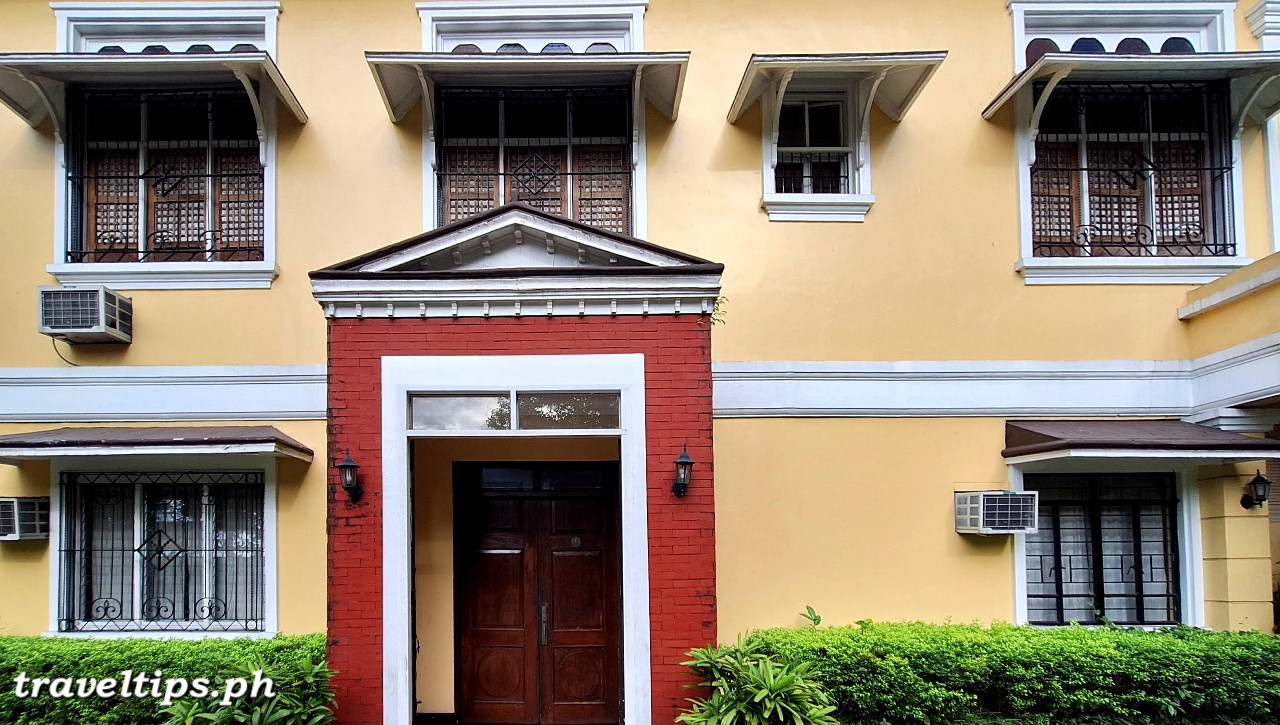 |
| The entrance is topped with a classic white triangular pediment featuring dentil molding underneath its roofline. |
An alternative angle of the portico reveals other interesting details of the entryway, which features unique glass panels etched with bamboo and wrought-iron leaves.
A leisurely stroll around its perimeter revealed other perspectives of the house’s exterior.
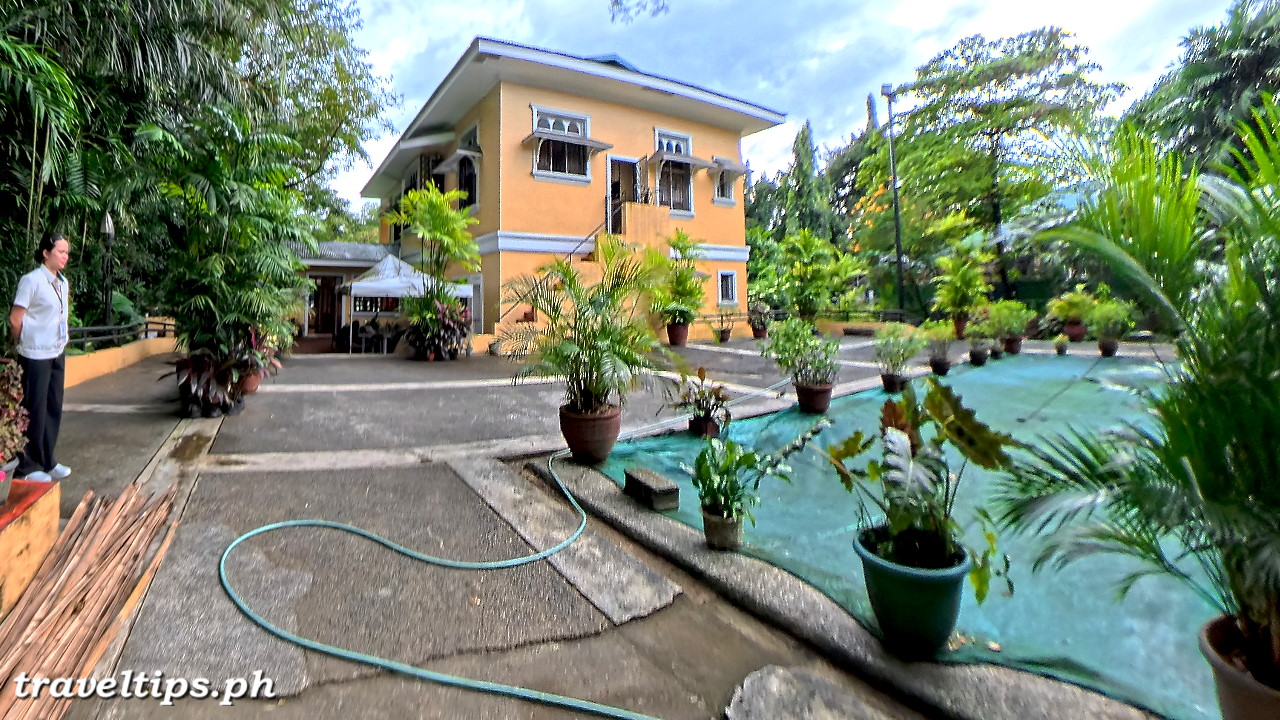 |
| The repurposed garden fountain at the back of the house as seen from ground level. |
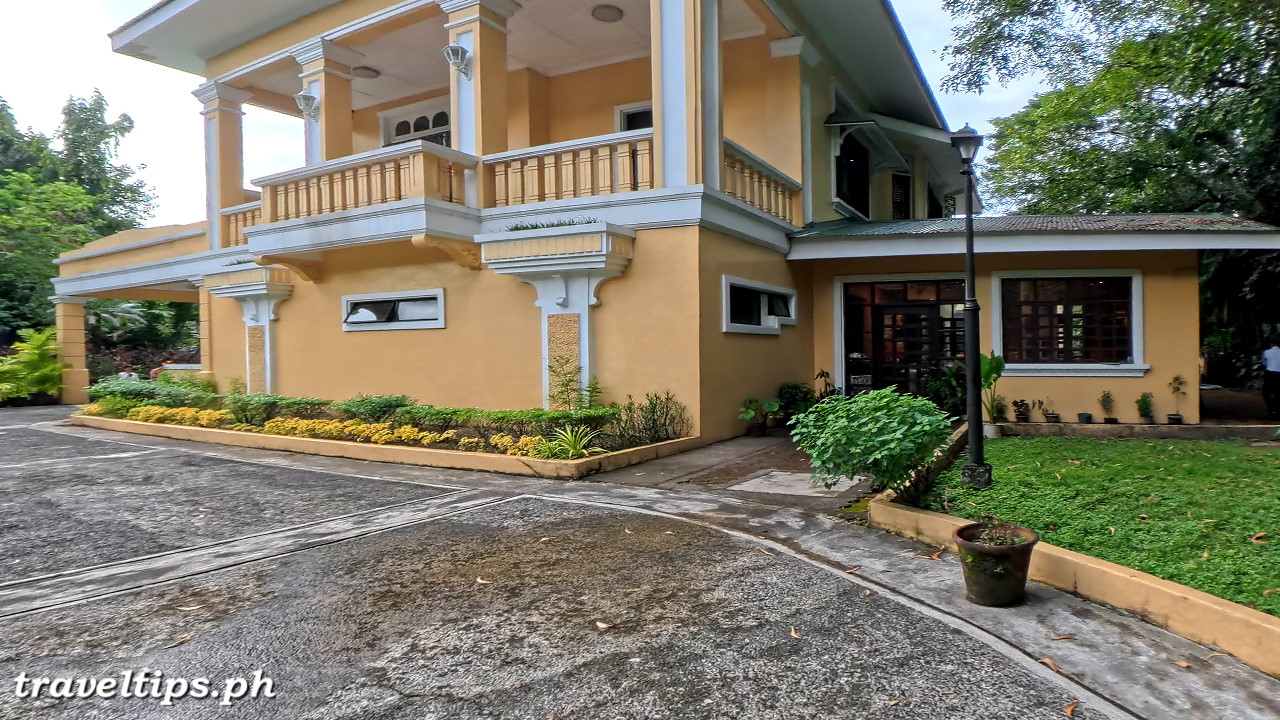 |
| An extension dining room built during the later years of the family’s stay. |
And just before I completely departed from its premises, I took several photographs of the house from the outside.
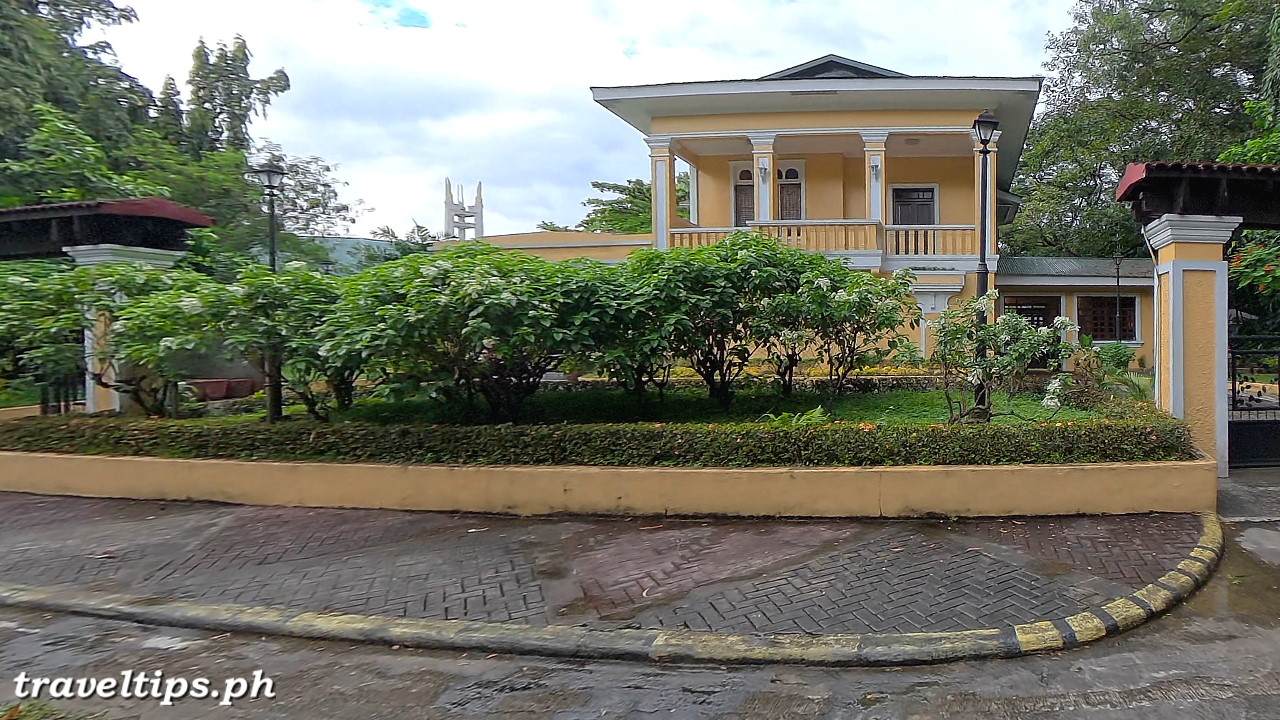 |
| The view of the heritage house with the Quezon Memorial Shrine at the back. |
|