|
Thursday November 20, 2025
The Quezon Memorial Shrine is the centerpiece of the Quezon Memorial Circle, built as a tribute to Manuel L. Quezon, the first president of the Philippine Commonwealth and a pivotal figure in the nation’s struggle for independence.
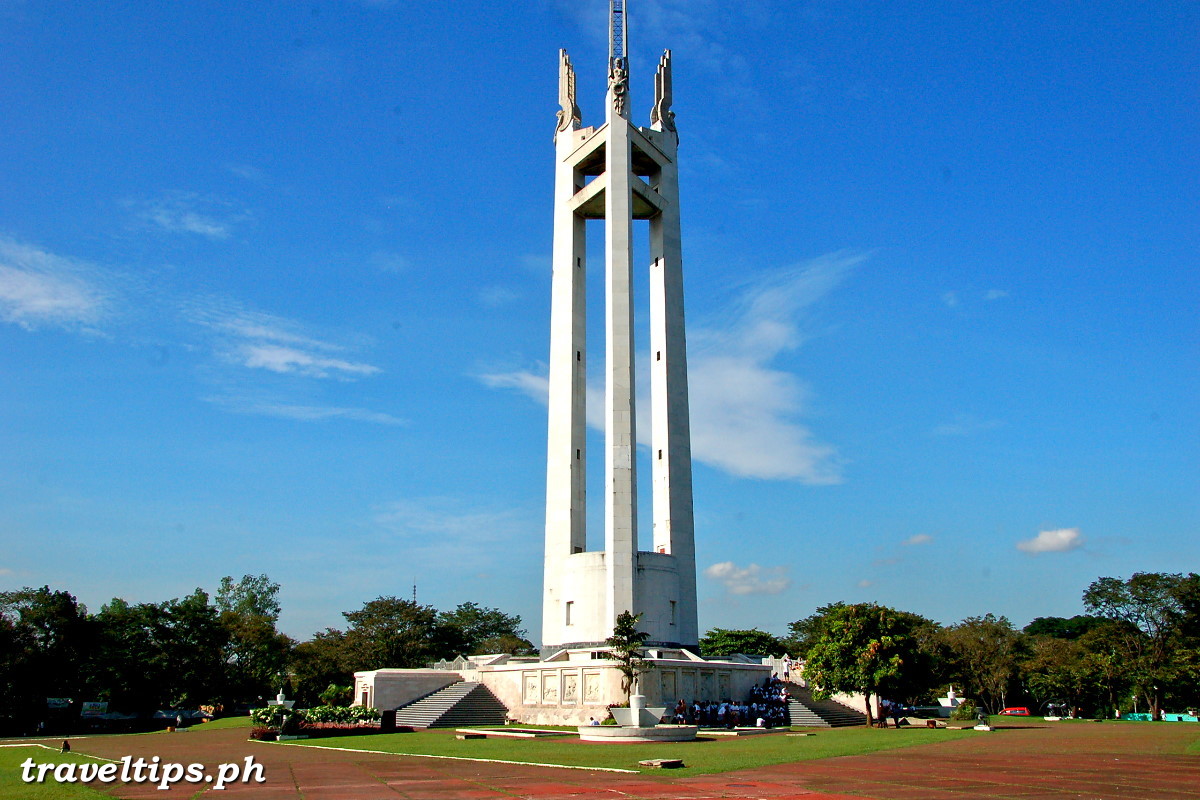 |
| The iconic Quezon Memorial Shrine, the focal point of the Quezon Memorial Circle. |
At the shrine’s forefront stands a bronze statue of Manuel L. Quezon, crafted by the late National Artist for Sculpture, Guillermo Tolentino.
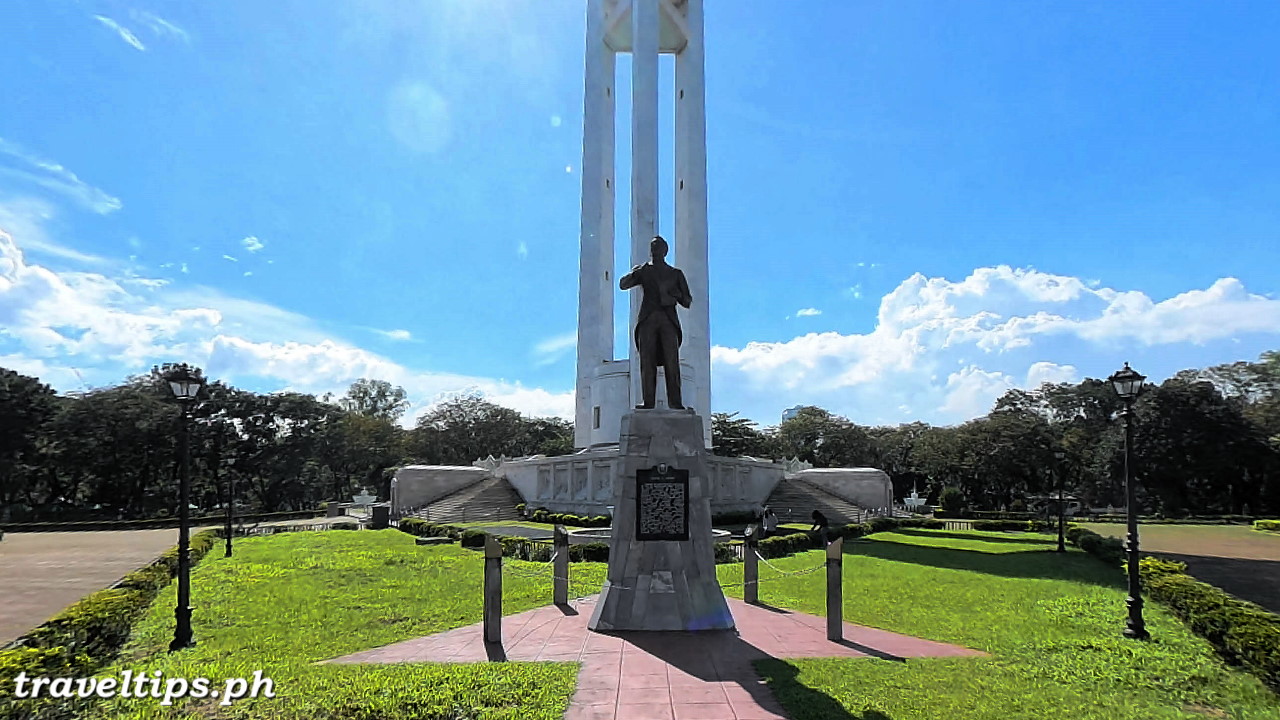 |
| A bronze statue of President Quezon, standing proudly in front of the shrine. |
Elevated on a 14-foot high pedestal adorned with a plaque, the 11-foot sculpture depicts a dynamic, passionate President Quezon captured mid-stride while delivering a fiery speech.
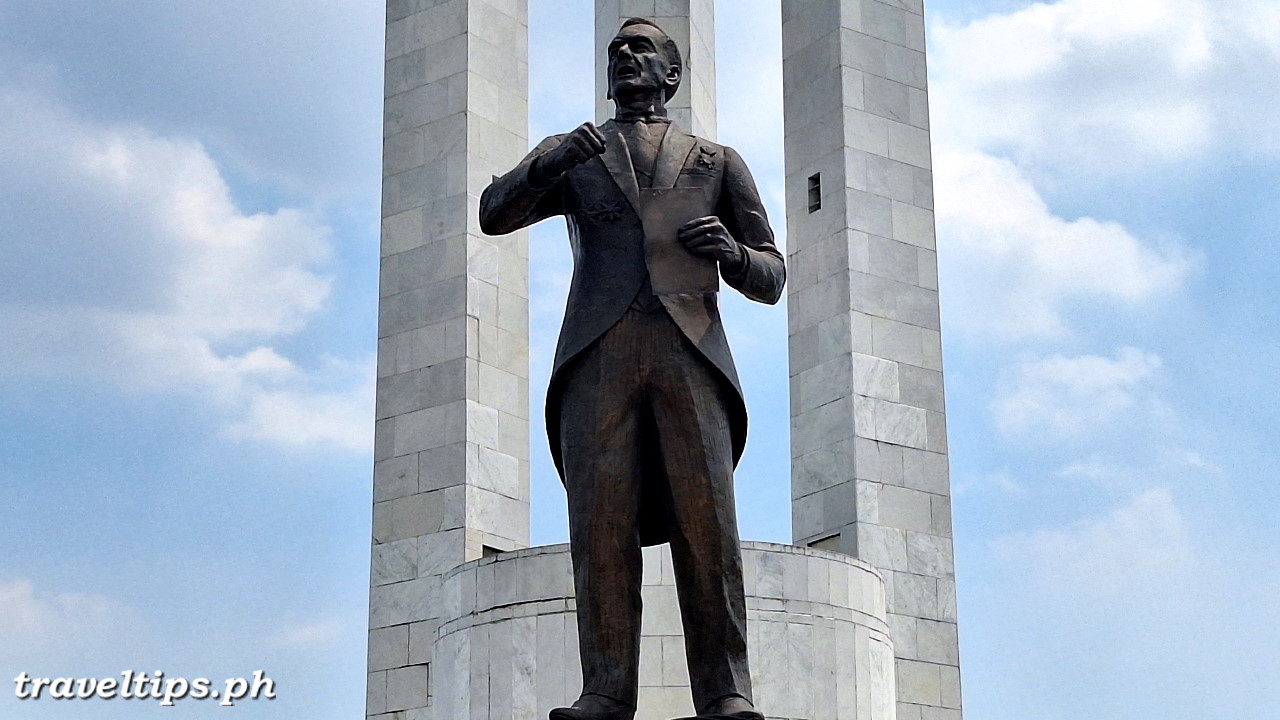 |
| The former president delivering a fiery speech. |
This celebrates his reputation as an electrifying and charismatic orator during his time as President of the Commonwealth.
The uniquely crafted shrine, an art deco monument that stands 66 meters tall characterizing Quezon’s age at his passing, features three upright pylons that converge at the top.
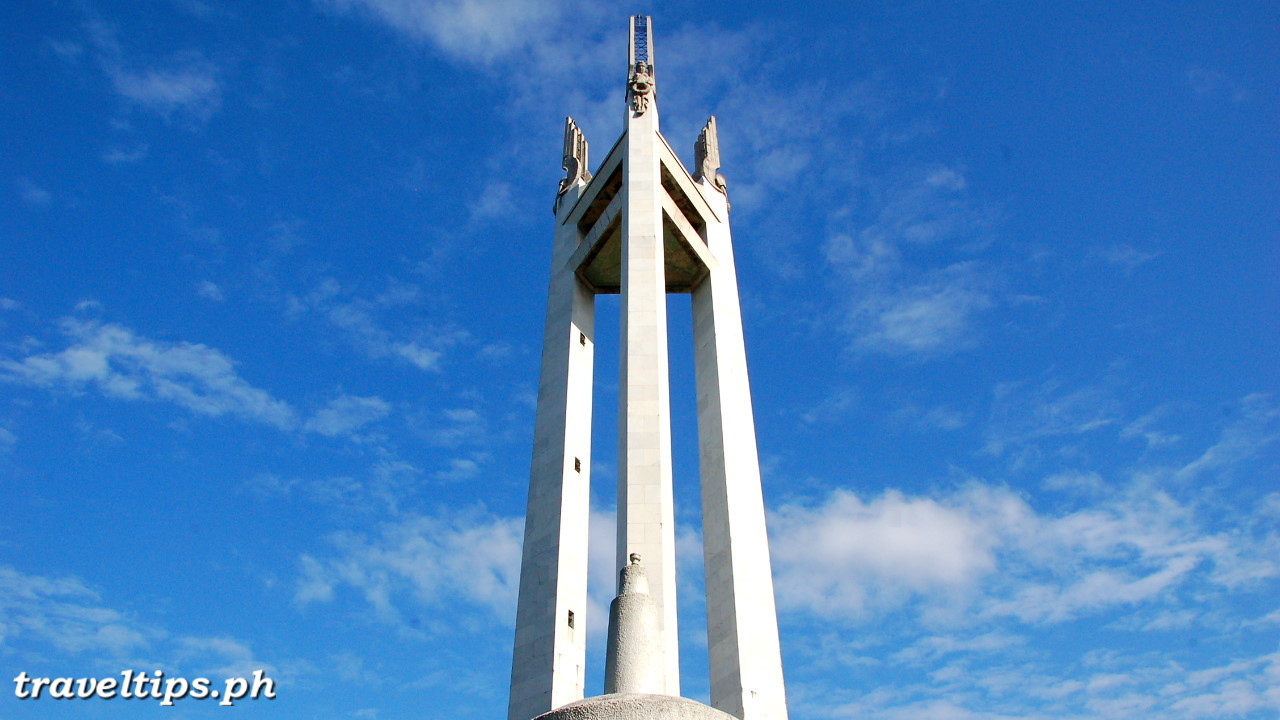 |
| The towering monument’s design symbolizes unity and national pride. |
Perched atop the pylons are three striking angelic figures intricately carved in stone, representing the key island groups of the Philippines—Luzon, Visayas, and Mindanao. With heads bowed in mourning and wings lifted towards the heavens, they symbolize national unity in honoring the memory of the former President.
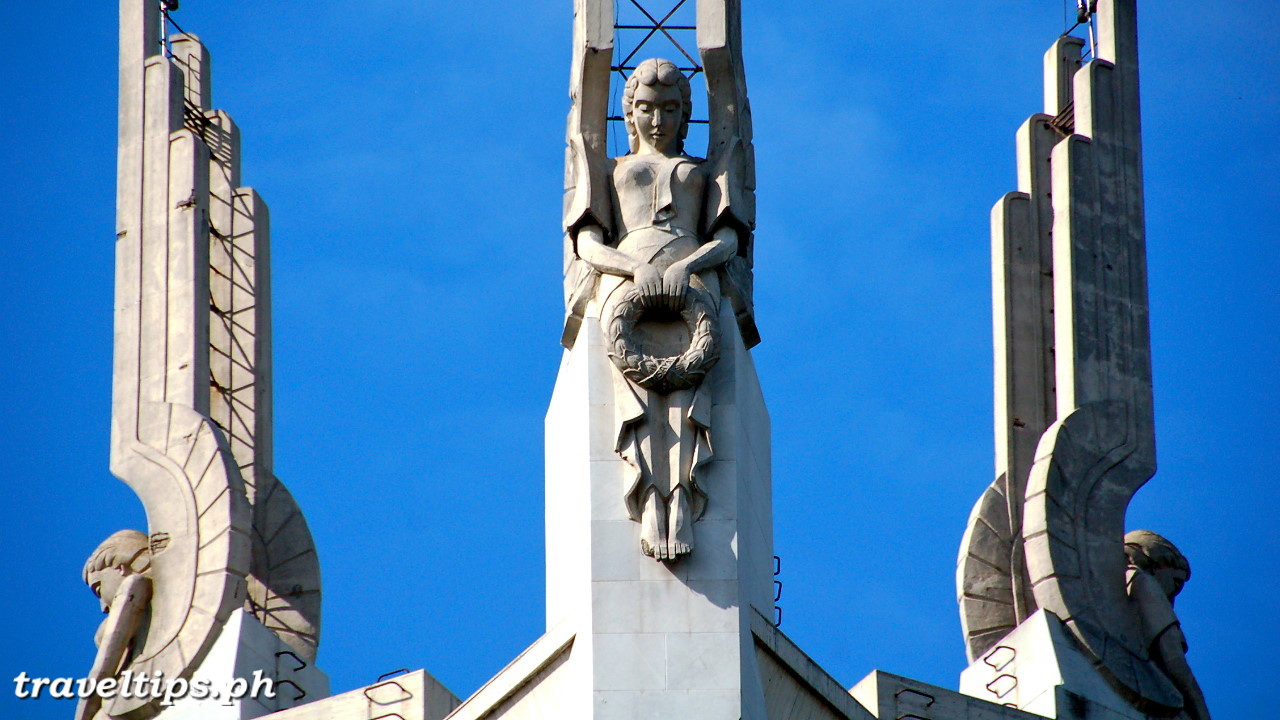 |
| A closer look at the mourning angels. |
Each angel holds a wreath of sampaguita, the national flower, which symbolize purity, fidelity, and a solemn promise of remembrance (rooted in the word sumpa kita or “I promise you”).
Each angel is dressed in a traditional Filipiniana attire specific to the region they represent, such as a formal traje de mestiza or terno for Luzon, a traditional Maria Clara or kimona for the Visayas, and a traditional sarong or biyatawi for Mindanao.
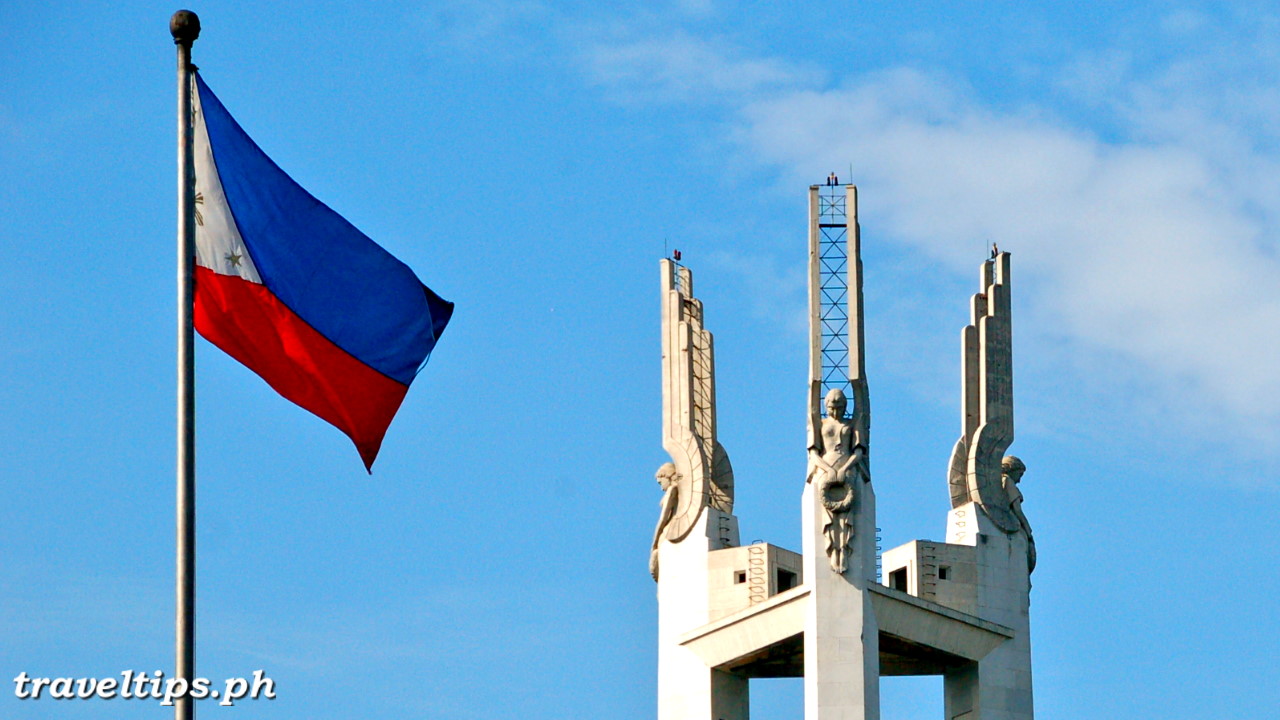 |
| Three angels symbolizing the main geographic areas of the Philippines—Luzon, Visayas, and Mindanao. |
These statues were sculpted by the Italian artist Francesco Riccardo Monti.
The impressive edifice is elevated on a massive concrete oval foundation, containing 31 panels of intricately carved marble bas-reliefs that illustrate significant events in Philippine history.
These beautifully sculpted panels were crafted in 1989 by the talented Filipino father-and-son duo, Manuel and Ron Casal, and were specifically designed as permanent elements seamlessly integrated around the base of the monument.
Some of the more notable moments and personalities in Philippine history portrayed in the murals include the following:
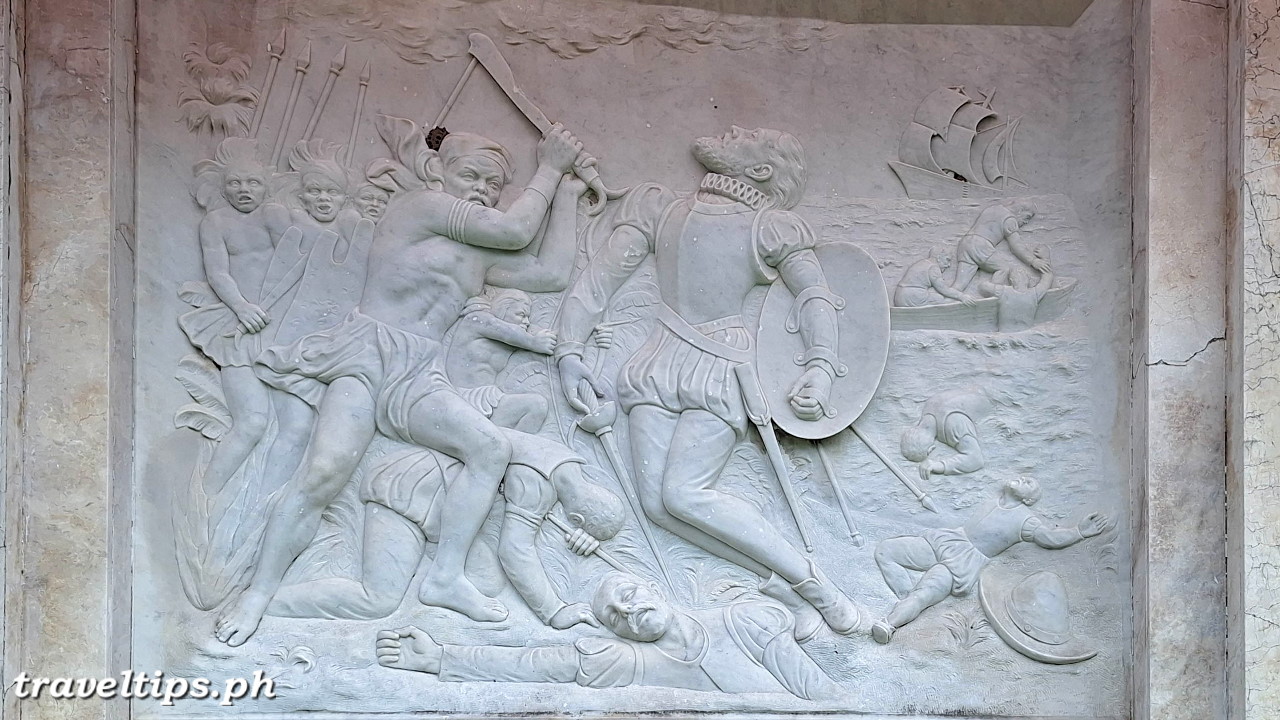 |
| Panel 3. The Battle of Mactan |
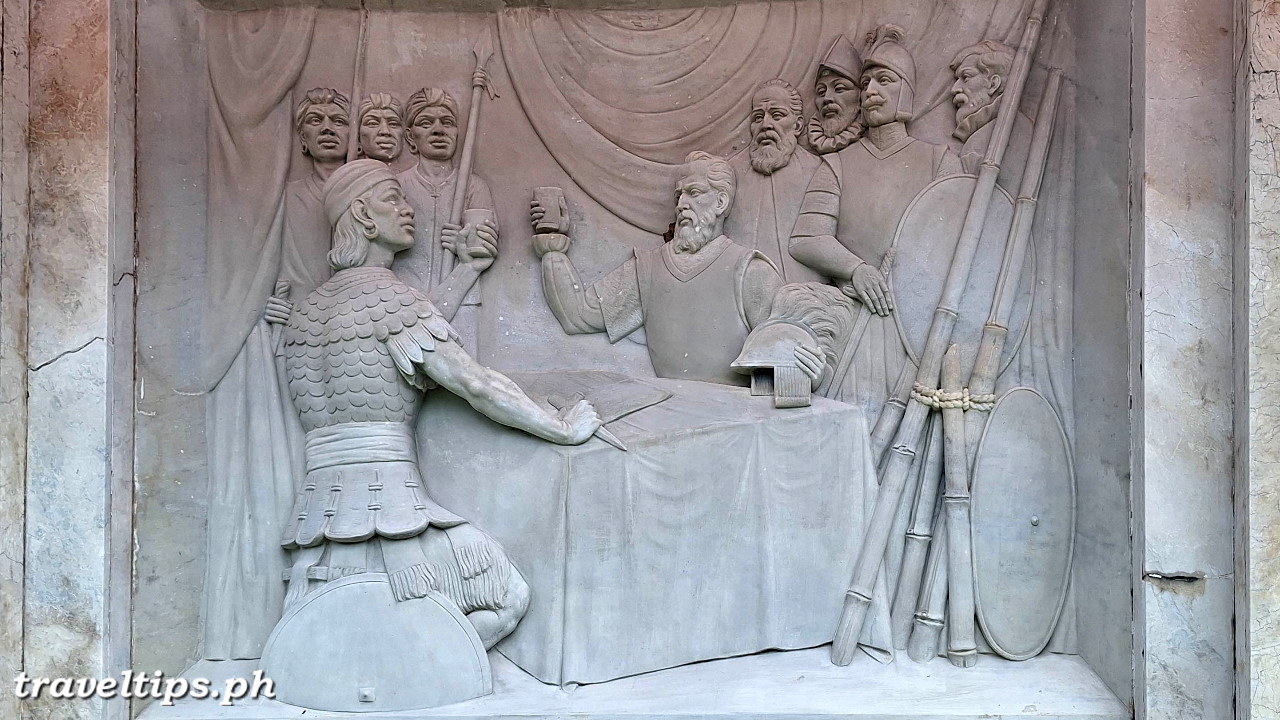 |
| Panel 2. Sandugo ~ The Blood Compact between Sikatuna and Legazpi |
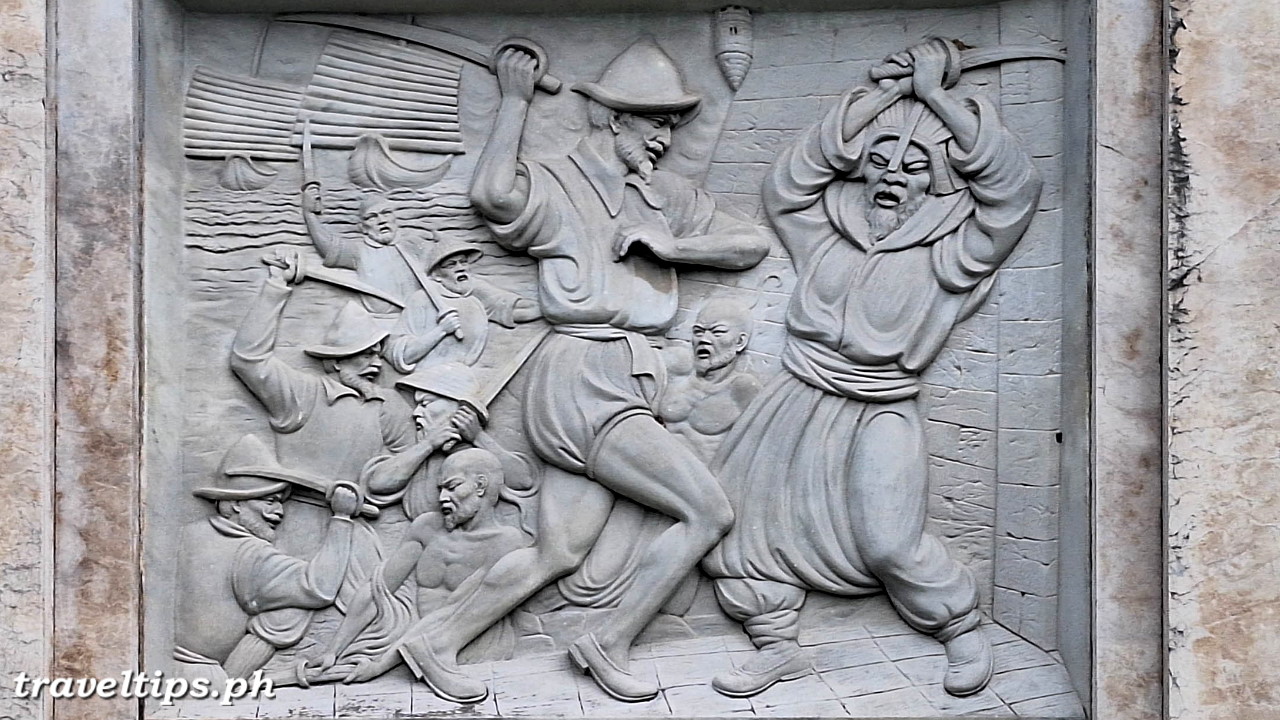 |
| Panel 29. The Siege of Manila by Limahong |
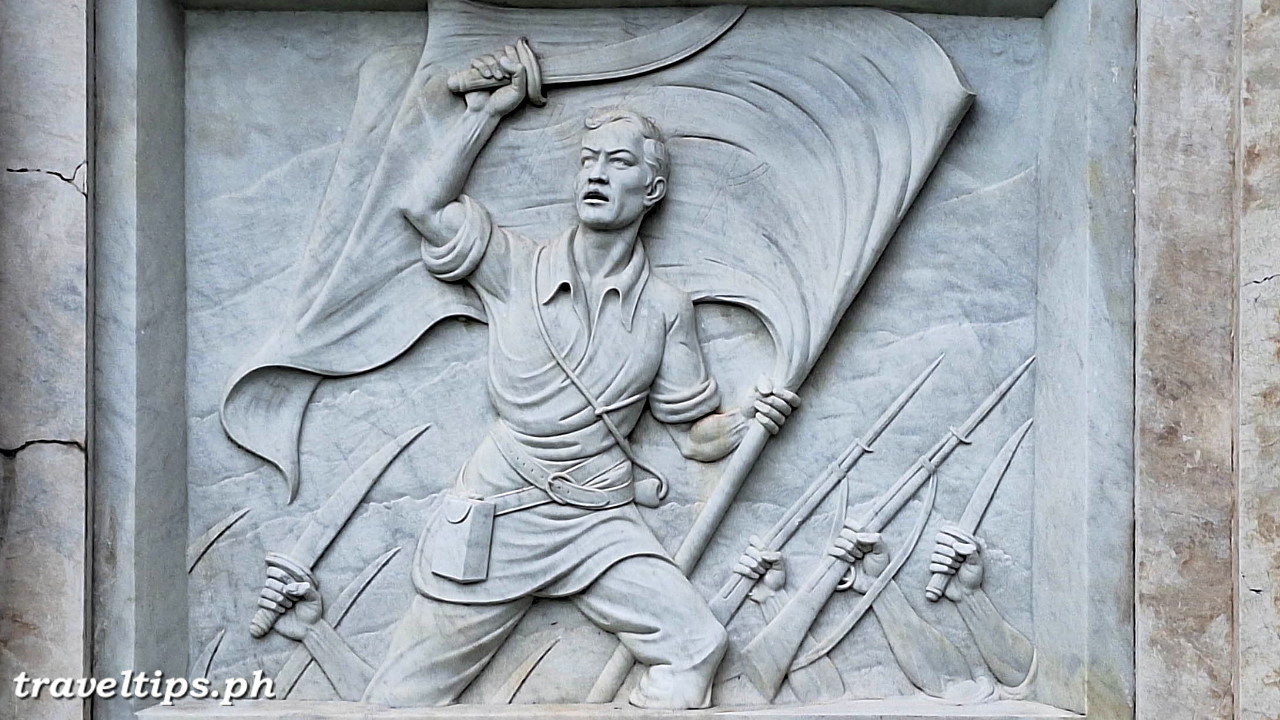 |
| Panel 20. Andres Bonifcaio ~ Father of the Katipunan |
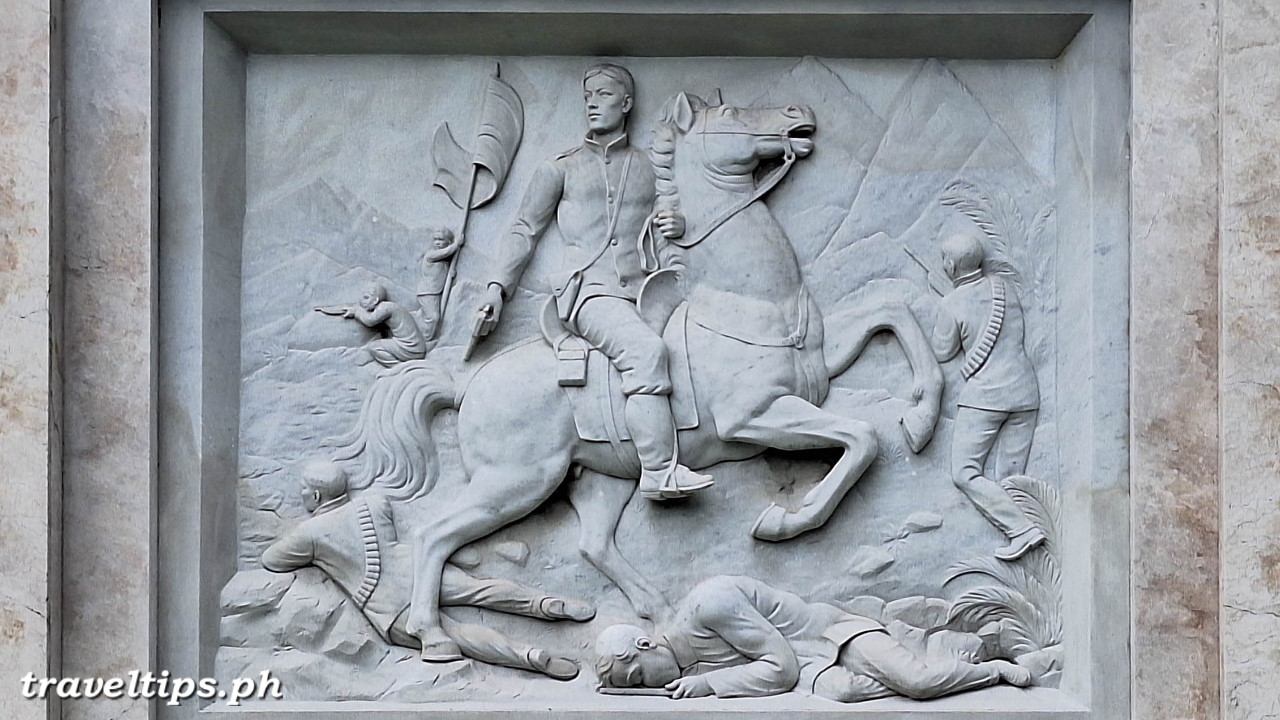 |
| Panel 16. The Battle of Tirad Pass |
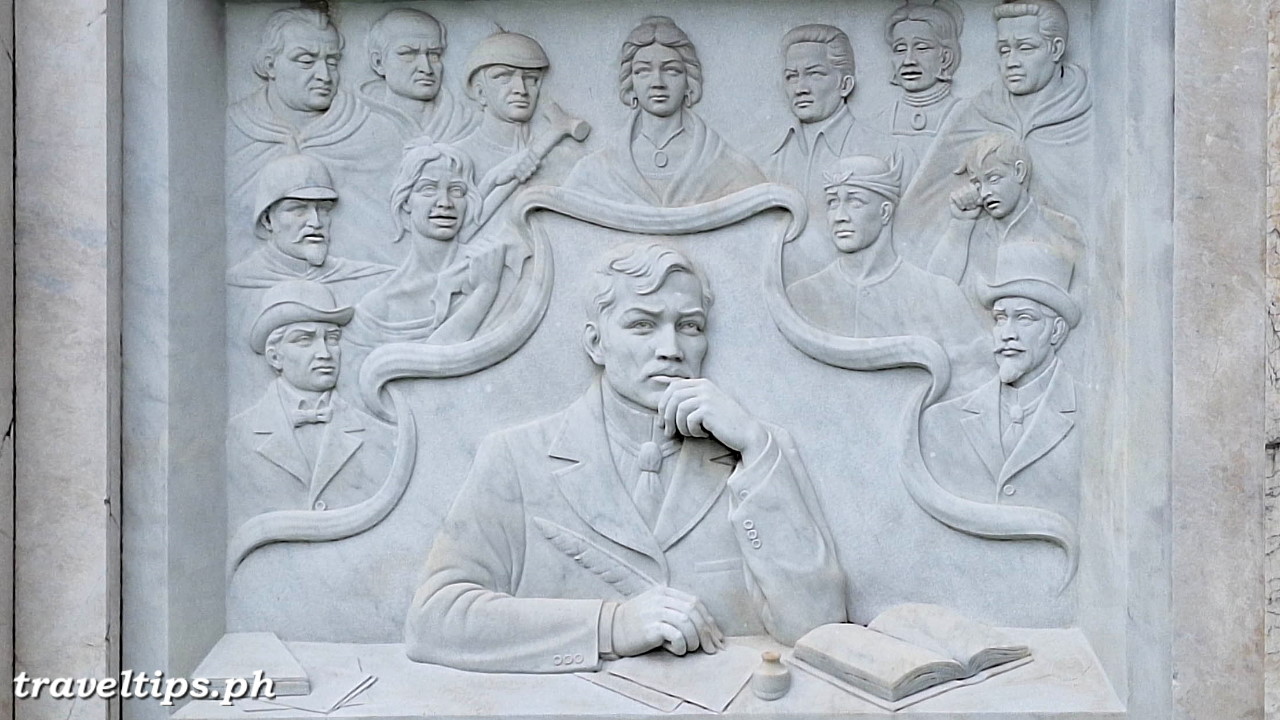 |
| Panel 22. Rizal’s Exile to Dapitan |
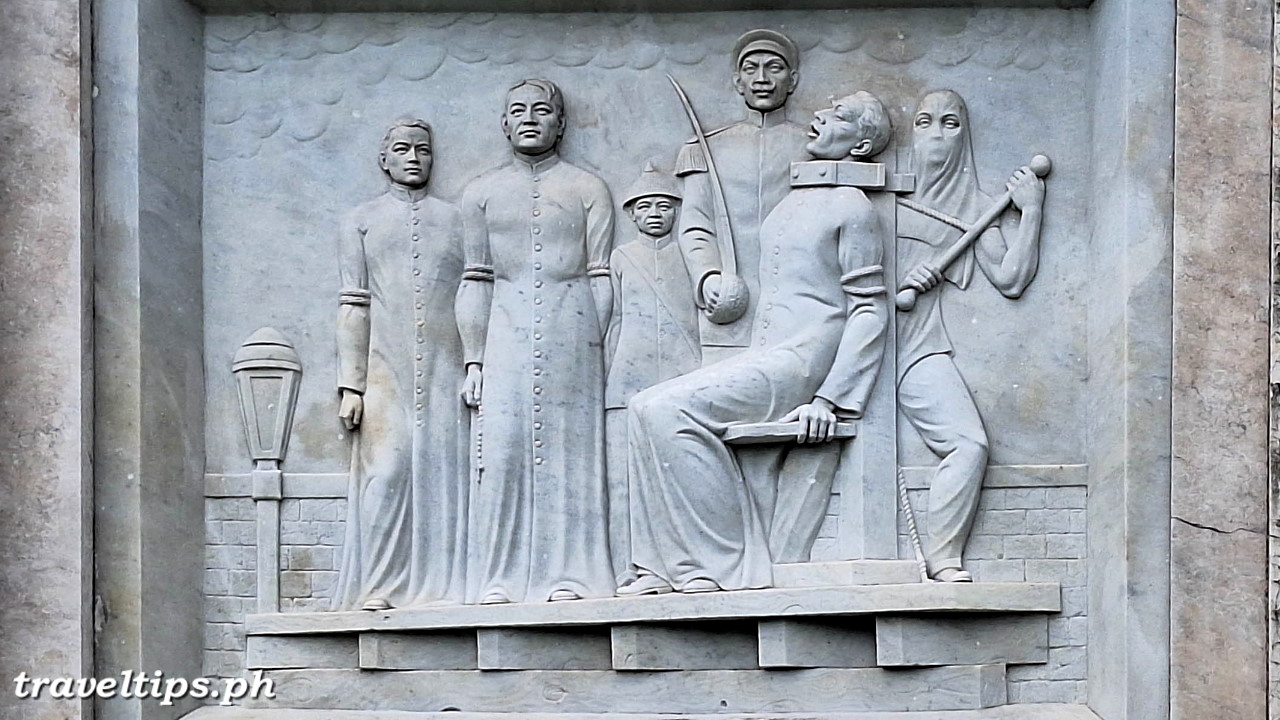 |
| Panel 23. Execution of Fathers Gomez, Burgoz and Zamora |
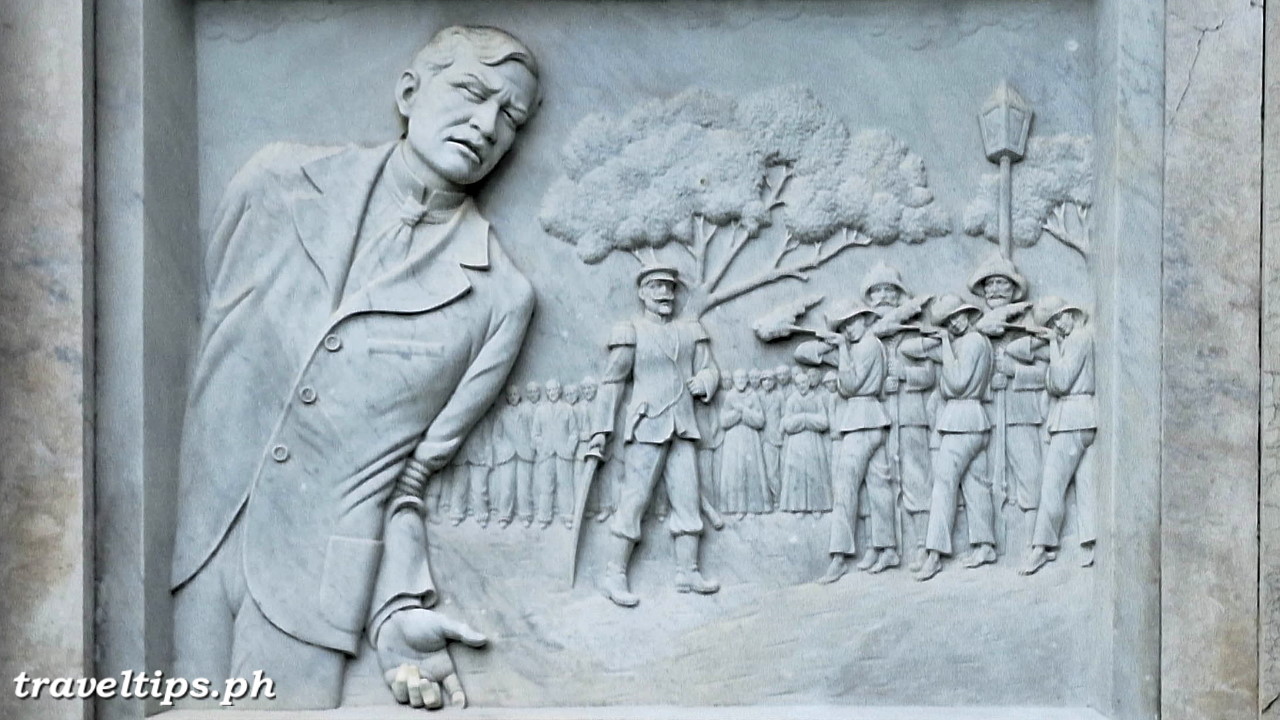 |
| Panel 21. Rizal’s Execution at Bagumbayan |
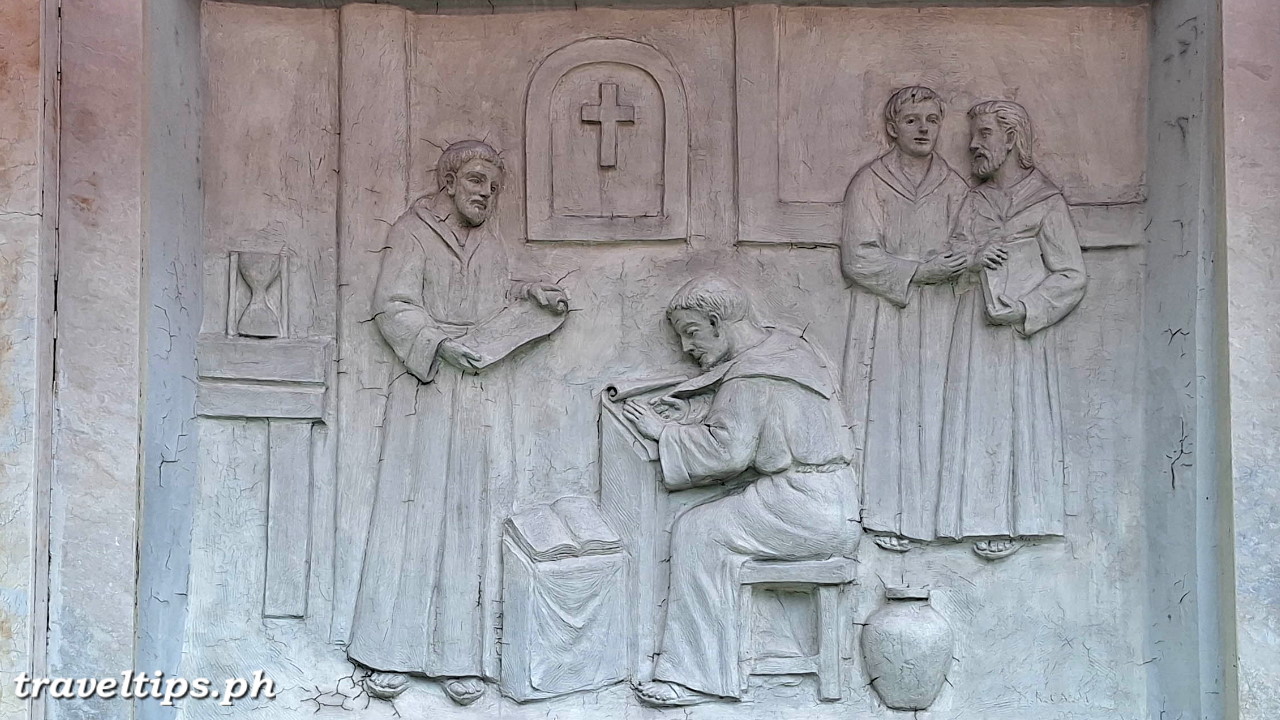 |
| Panel 1. Fray Juan de Plasencia Authoring the Doctrina Cristiana |
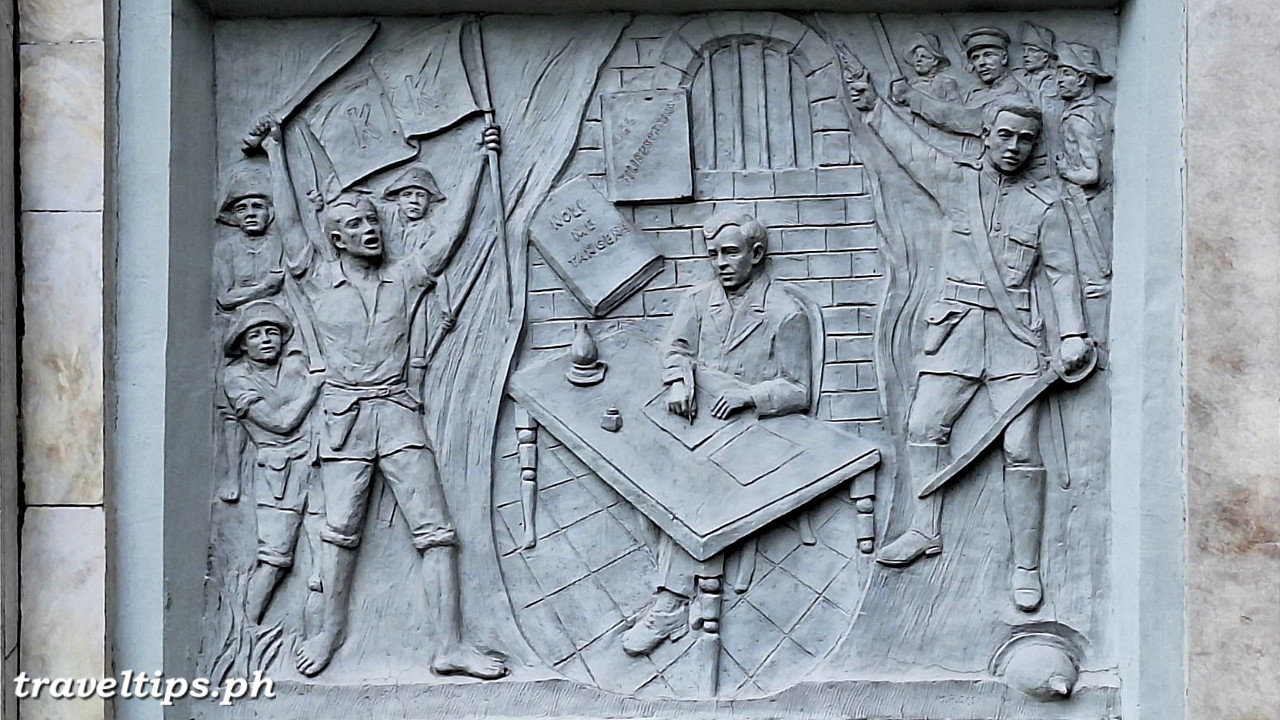 |
| Panel 17. Filipino Revolutionists in Victory |
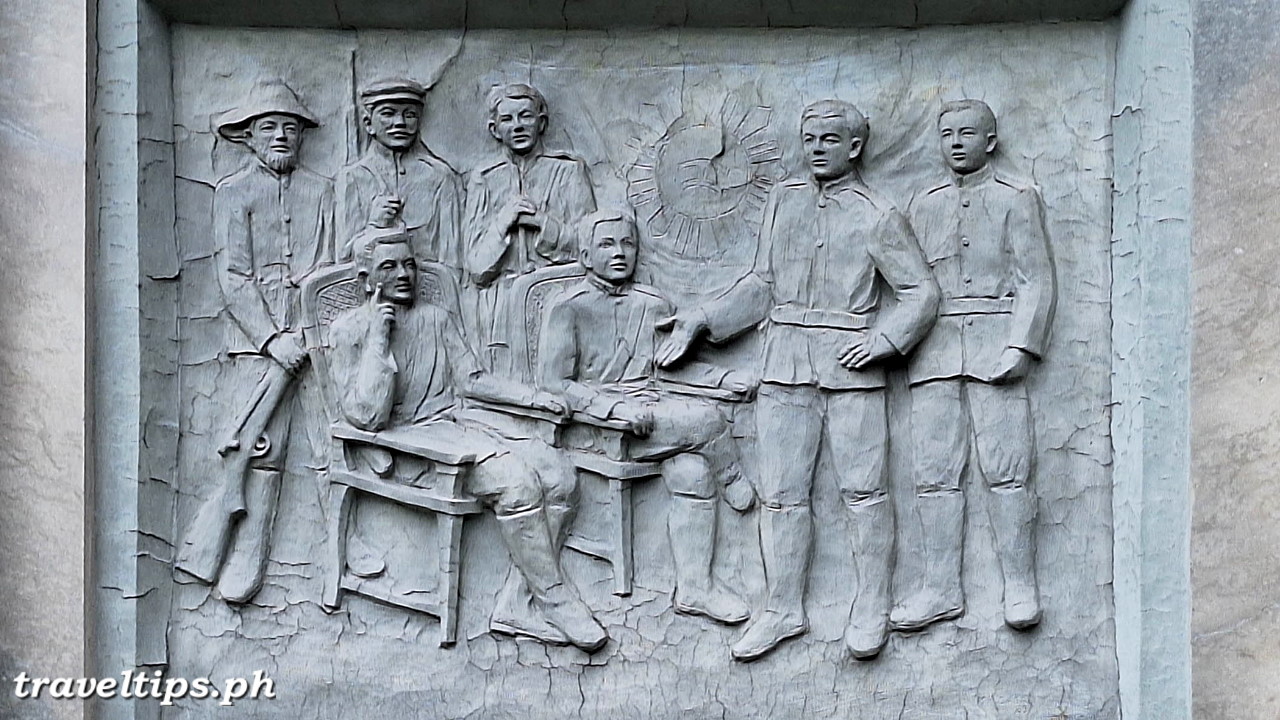 |
| Panel 18. Generals of the Philippine Revolution |
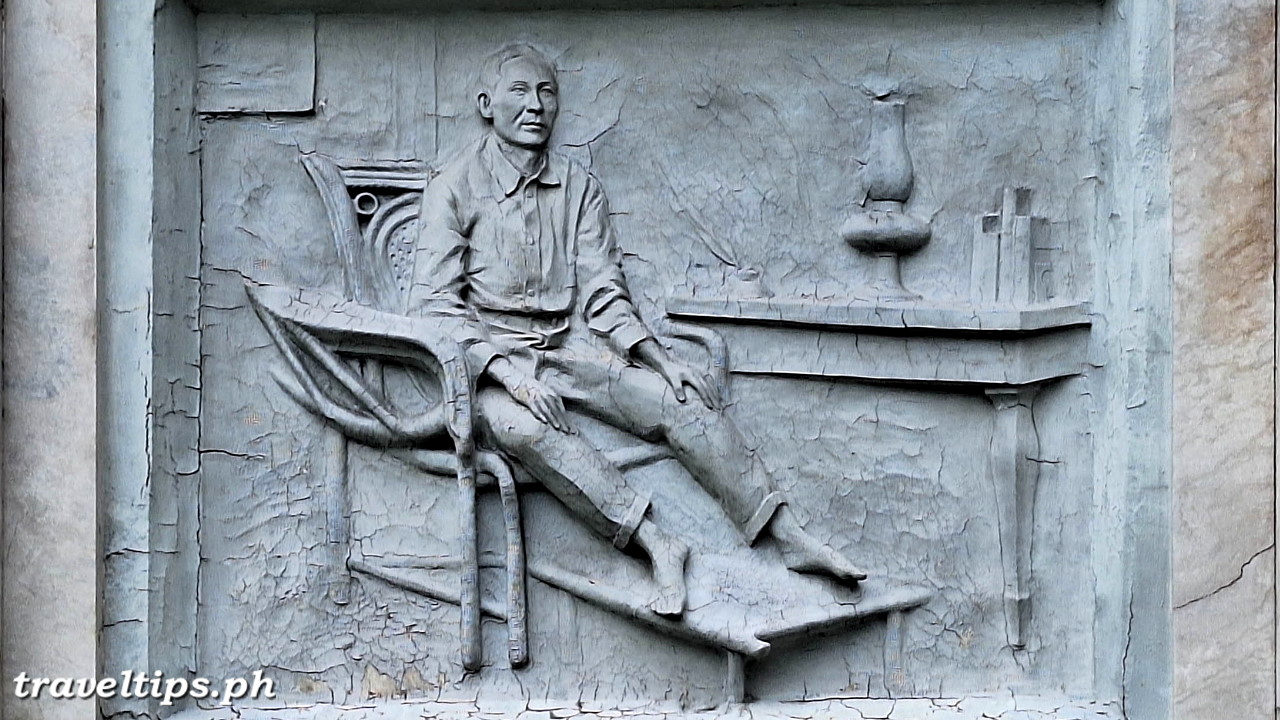 |
| Panel 19. Apolinario Mabini ~ An Intellectual Giant of the Revolution |
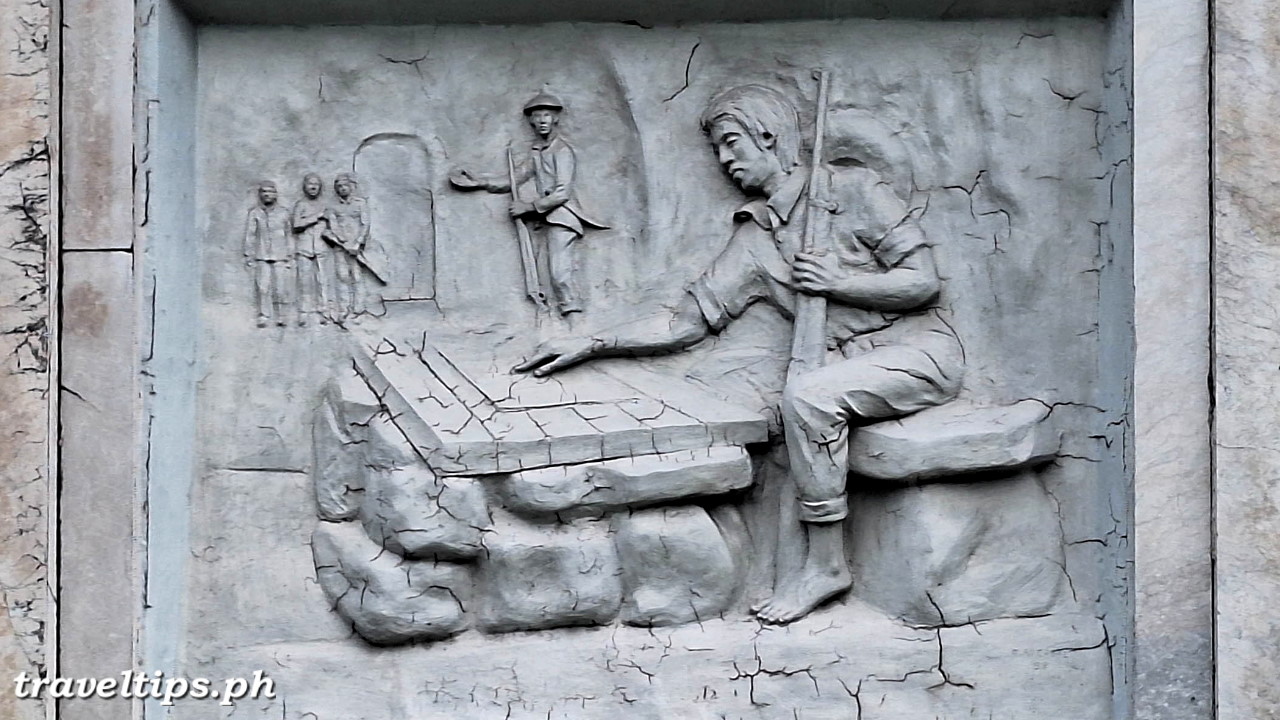 |
| Panel 28. Francisco Dagohoy ~ Led the Longest Revolution Against the Spaniards |
Some of the bas reliefs portrayed Quezon and his spouse in different moments in history.
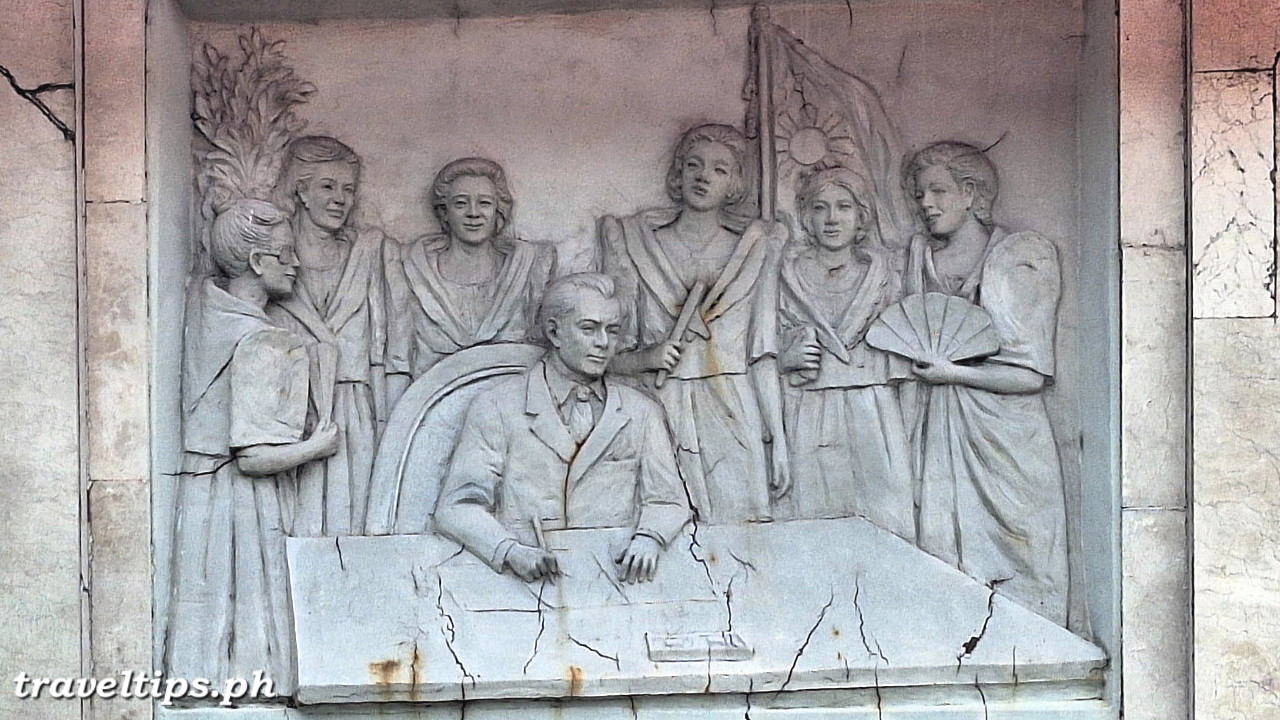 |
| Panel 9. Quezon Signing the Women’s Suffrage Law |
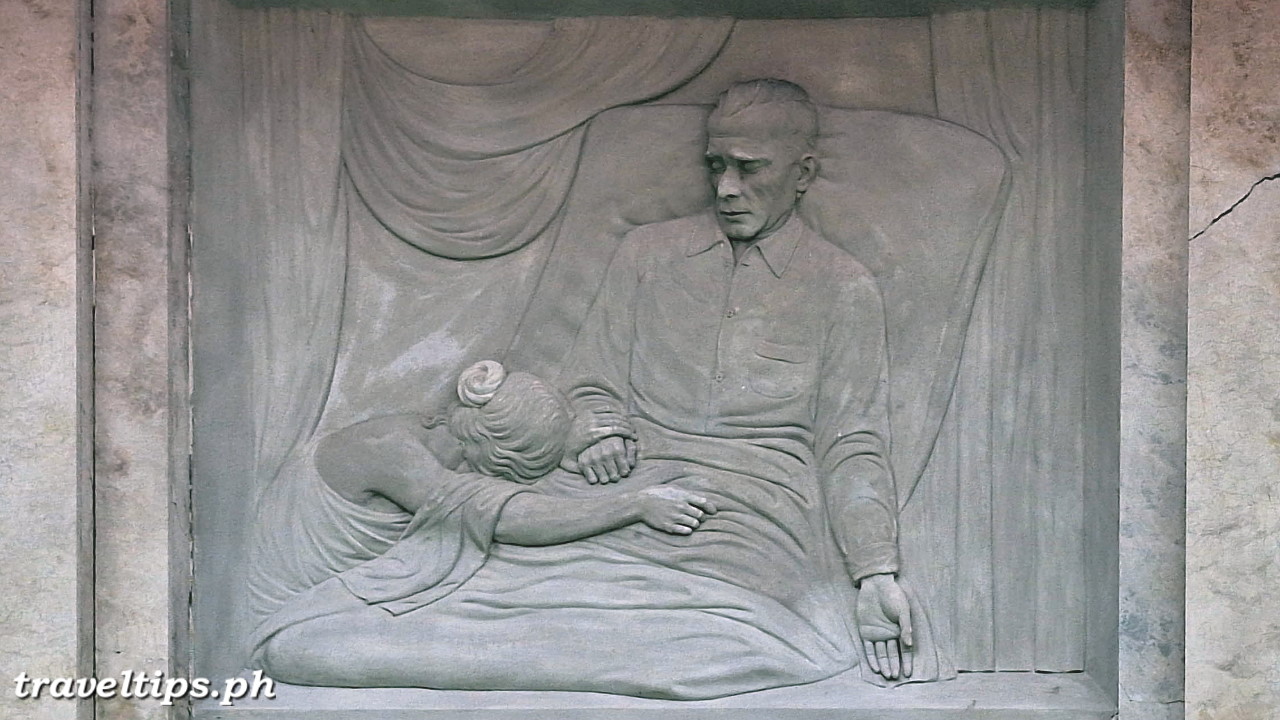 |
| Panel 10. Quezon in Sick Bed |
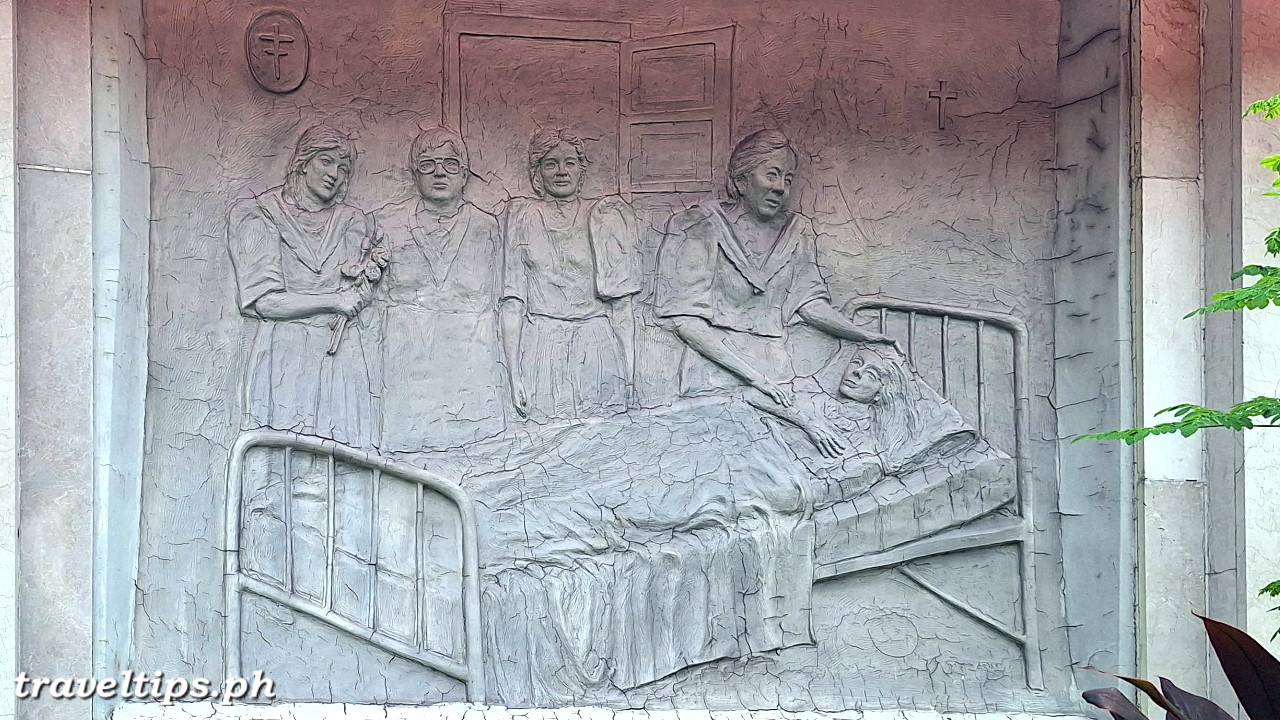 |
| Panel 11. Aurora Quezon at the Quezon Institute |
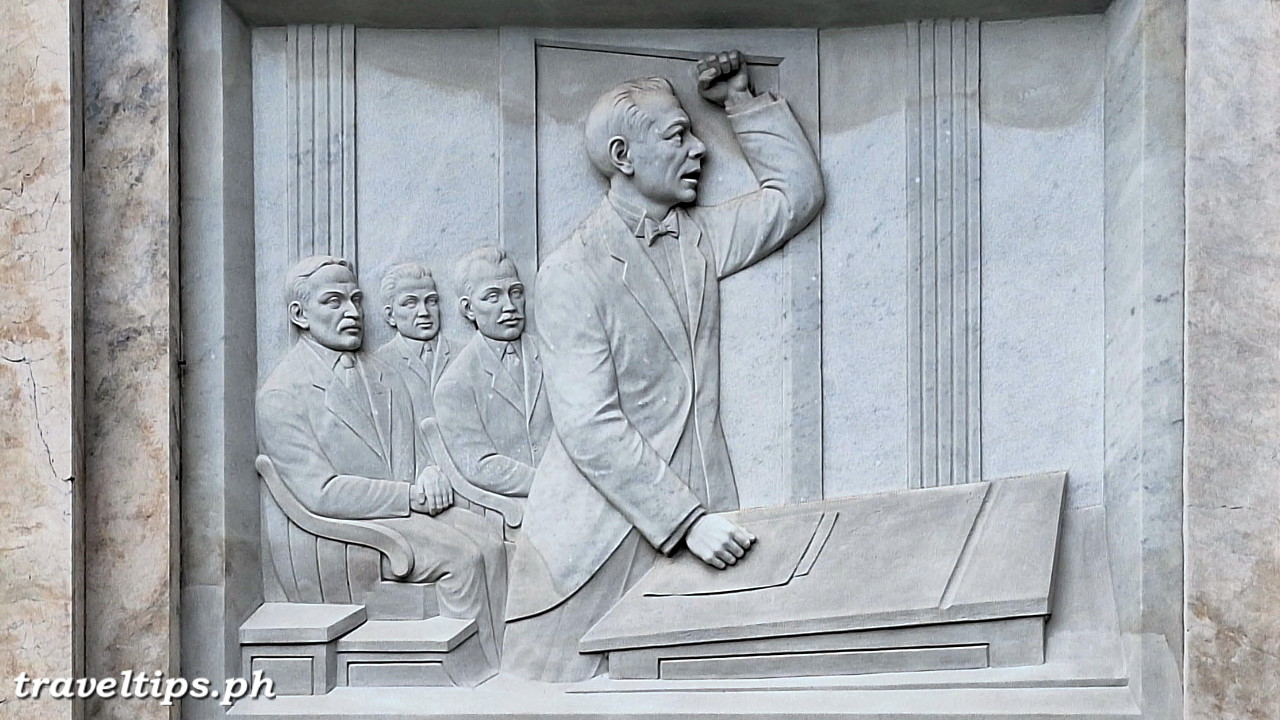 |
| Panel 13. Manuel L. Quezon’s Inaugural Speech |
Being exposed to the elements, these reliefs suffer from natural degradation. While most of the synthetic marble reliefs are still intact, some have started to show signs of deterioration, such as cracking and flaking.
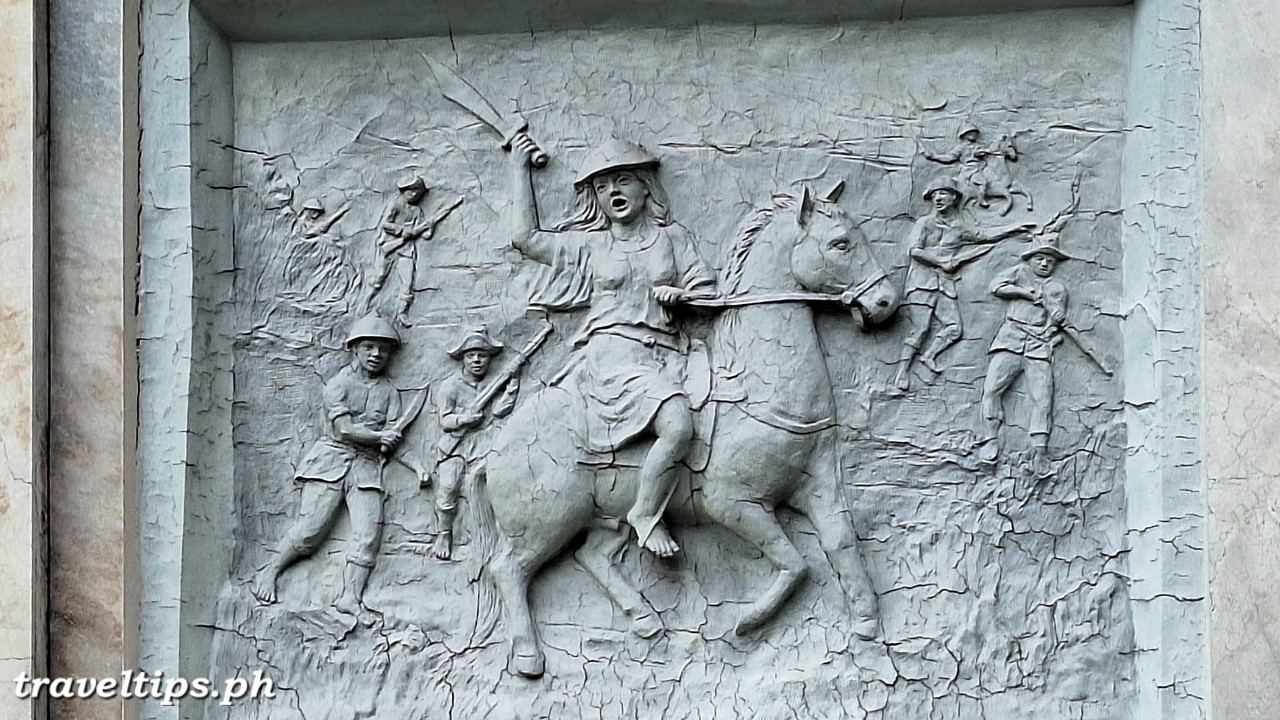 |
| Panel 15. Gabriela Silang, First Filipina to Lead a Revolt |
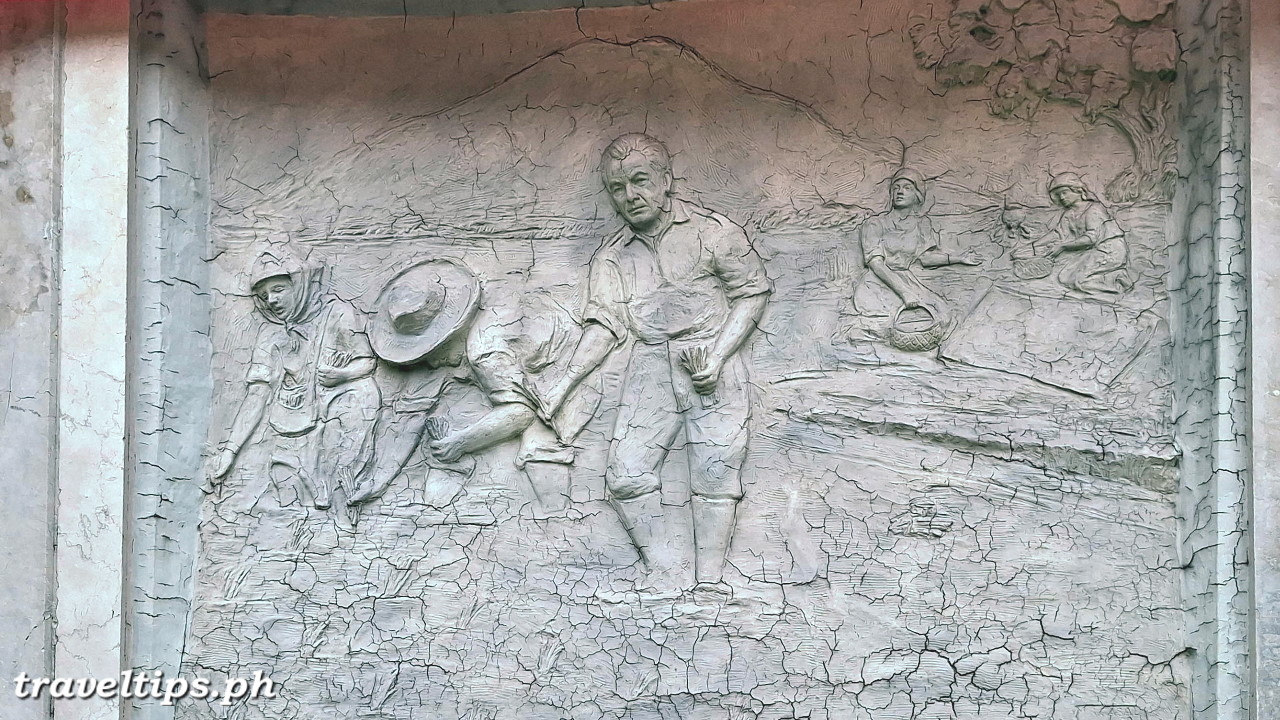 |
| Panel 12. Quezon Planting Rice |
Some have captions that can no longer be read, particularly those pertaining to pre-colonization history.
And sadly, a few are already in a sorry state of disrepair, their intended meanings can no longer be conveyed.
But thankfully, there are ongoing efforts to rehabilitate and preserve the historical structures at the shrine, which was officially declared a National Cultural Treasure by the National Historical Commission of the Philippines (NHCP), who also happens to be directly in charge of the shrine.
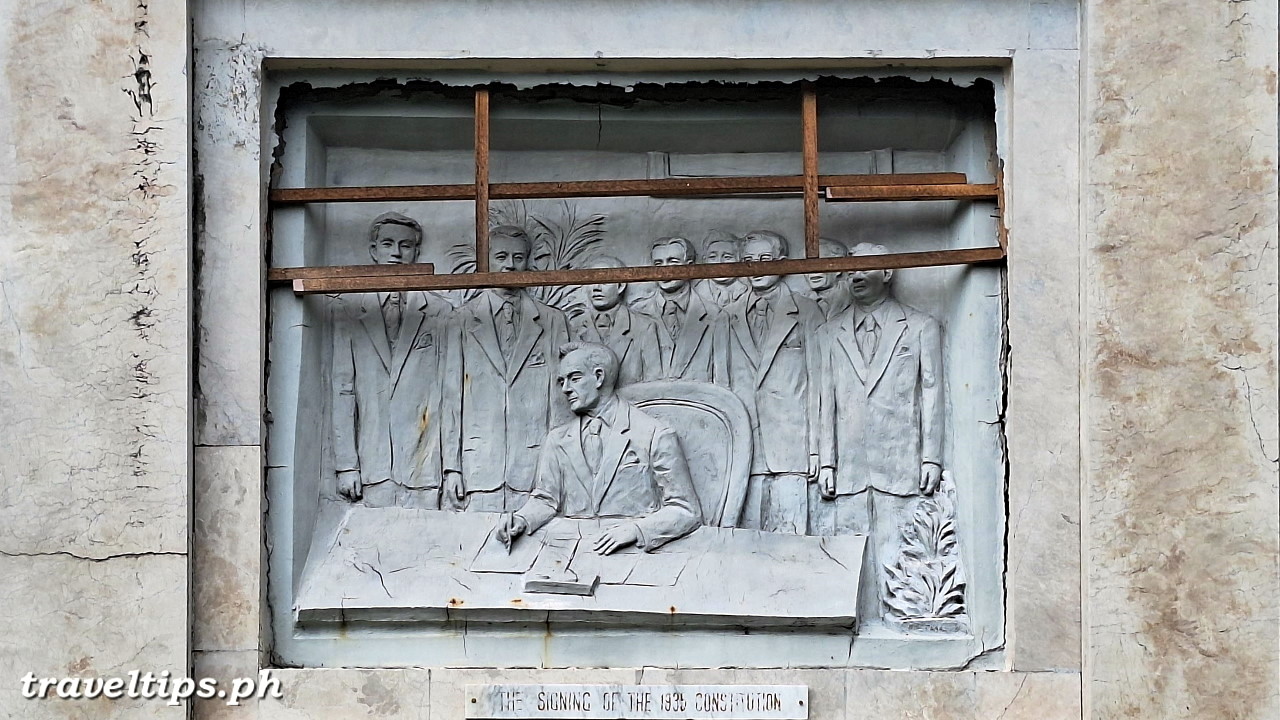 |
| Panel 14. Quezon Signing the 1936 Constitution |
It is our hope that the NHCP secures sufficient funding for these essential restoration and conservation initiatives, to ensure that the delicate artworks are fully preserved for future generations to appreciate.
In addition to its remarkably impressive exterior, the shrine’s other significant feature lies beneath its foundation: a museum and mausoleum dedicated to depicting the life and political career of President Quezon.
In the following post, we shall delve into this exciting discovery in greater detail.
|