|
Sunday October 11, 2026
Pinaglabanan Shrine occupies a vast tract of land located along Pinaglabanan Street in San Juan City, Metro Manila.
The shrine is positioned on a sprawling outdoor plaza merely a 15-minute drive from my residence in Mandaluyong City, providing a nearby peaceful retreat from the urban chaos of the metro.
It is conveniently located adjacent to the stunning San Juan City Hall – an iconic landmark in its own right.
This historical park serves as a prominent community hub, delivering a serene sanctuary for contemplation and relaxation, while simultaneously providing an engaging and compelling insight into the history of the Philippine Revolution.
It offers an ideal destination where residents and visitors alike can gather meaningfully, all while immersing themselves in the nation’s pivotal historical narrative that shaped modern Philippines.
The shrine is set within a 5-hectare landscaped park featuring a wide stone-paved walkway bordered by well-maintained open lawns and colorful shrubs.
The perimeter features an abundance of thoughtfully designed green spaces, complemented by walking paths and jogging trails, making it enjoyable to navigate on foot.
The expansive park is open daily from early morning till early evening, making it flexible for both morning exercisers and afternoon heritage sightseers.
Standing prominently towards the front end of the plaza is the Spirit of Pinaglabanan, a massive bronze sculpture by acclaimed expressionist Eduardo Castrillo.
The sculpture features elongated, expressionist figures that honor the heroism of the Katipuneros during the first major battle of the 1896 Philippine Revolution.
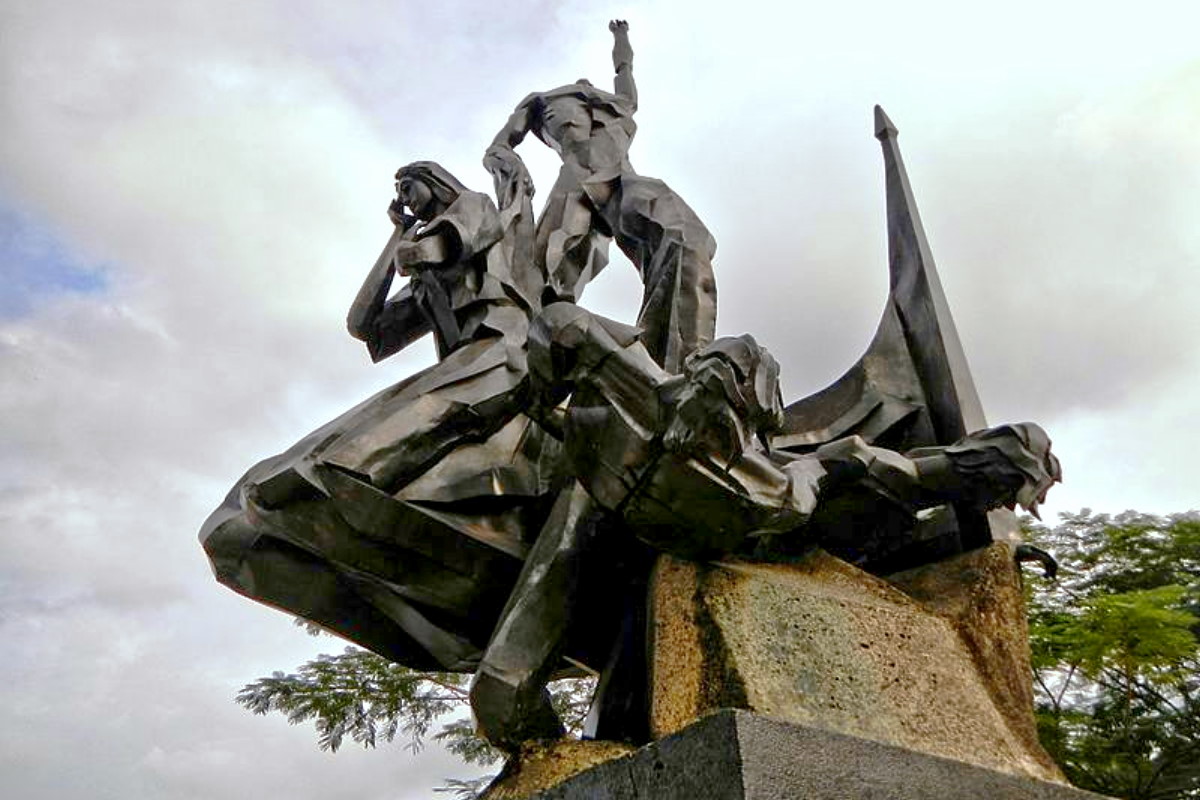 |
| Photo Credit: Alchetron |
Positioned in front of the Spirit of Pinaglabanan monument is the Eternal Flame of Freedom.
This spherical monument features a sculpted cut-out design representing the sun rays from the Philippine flag, symbolizing the Filipinos’ undying patriotism, adherence to the principles of liberty, and the ‘spark’ that ignited the 1896 Philippine Revolution.
From the city hall grounds, it takes about a 3-minute leisurely stroll to reach the front end of the plaza.
In the succeeding sections, we shall be exploring the prominent historical features of the shrine, in the order that we visited them.
First we take an educational trip into Manila’s subterranean past, then explore the restored underground water reservoir, and finally, gain insight into the history of the Katipunan and the 1896 uprising that started it all.
|